

Can PTFE Convoluted Tubing Be Used in Aerospace Applications?
In the demanding field of aerospace engineering, the selection of materials for various components is of utmost importance. Every part must meet stringent requirements for performance, reliability, and safety. One such material that has gained significant attention in recent years is PTFE (Polytetrafluoroethylene) convoluted tubing. As a supplier of PTFE convoluted tubing, I am often asked about its suitability for aerospace applications. In this blog post, I will explore the properties of PTFE convoluted tubing and evaluate its potential use in the aerospace industry.
Properties of PTFE Convoluted Tubing
PTFE is a synthetic fluoropolymer known for its exceptional chemical resistance, low friction coefficient, and high temperature stability. These properties make it an ideal material for a wide range of applications, including those in the aerospace sector. Convoluted tubing, on the other hand, has a flexible and corrugated structure that allows it to bend and flex easily, making it suitable for applications where space is limited or where movement is required.
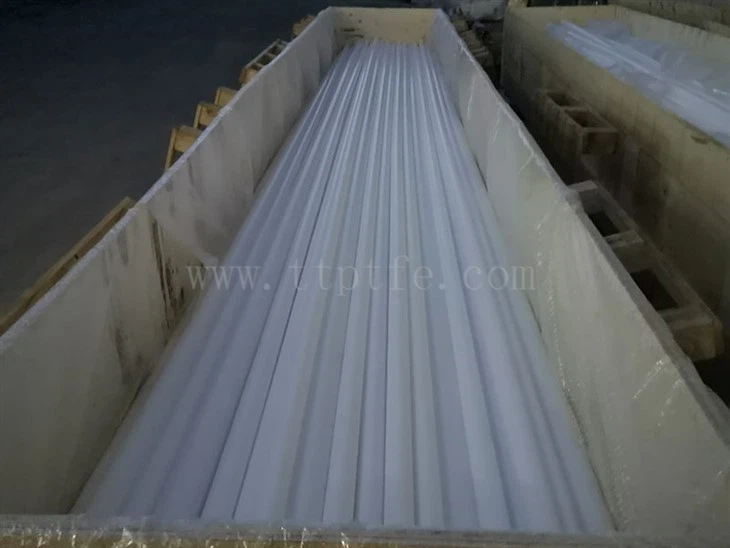

Combining the properties of PTFE and convoluted tubing results in a product that offers several advantages. Firstly, PTFE convoluted tubing has excellent chemical resistance, which means it can withstand exposure to a wide range of chemicals, including fuels, lubricants, and hydraulic fluids. This makes it ideal for use in aerospace applications where contact with these substances is common.
Secondly, PTFE has a very low friction coefficient, which reduces the resistance to fluid flow through the tubing. This can improve the efficiency of fluid systems in aircraft, such as fuel lines and hydraulic systems. Additionally, the low friction surface of PTFE convoluted tubing helps to prevent the build-up of deposits and contaminants, which can improve the reliability and longevity of the system.
Another important property of PTFE is its high temperature stability. It can withstand temperatures ranging from -200°C to +260°C (-328°F to +500°F), making it suitable for use in both high and low temperature environments. This is particularly important in aerospace applications, where components may be exposed to extreme temperatures during flight.
The flexibility of convoluted tubing also makes it easy to install and route in complex aerospace systems. It can be bent and shaped to fit around obstacles and tight spaces, reducing the need for additional fittings and connectors. This not only simplifies the installation process but also reduces the weight and cost of the system.
Aerospace Applications of PTFE Convoluted Tubing
There are several potential applications for PTFE convoluted tubing in the aerospace industry. One of the most common uses is in fuel systems. PTFE convoluted tubing can be used to transport fuel from the fuel tank to the engine, as well as to connect various components within the fuel system, such as fuel pumps, filters, and injectors. Its chemical resistance and low friction properties make it an ideal choice for this application, as it can prevent fuel leakage and ensure efficient fuel flow.
Hydraulic systems in aircraft also benefit from the use of PTFE convoluted tubing. Hydraulic systems are used to operate various aircraft components, such as landing gear, flaps, and brakes. PTFE convoluted tubing can be used to transmit hydraulic fluid between different parts of the system, providing a reliable and flexible connection. Its high temperature stability and chemical resistance ensure that it can withstand the harsh operating conditions of hydraulic systems.
In addition to fuel and hydraulic systems, PTFE convoluted tubing can also be used in other aerospace applications, such as pneumatic systems, electrical wiring harnesses, and environmental control systems. In pneumatic systems, it can be used to transport compressed air for various functions, such as actuating valves and operating instruments. In electrical wiring harnesses, it can provide protection for wires and cables, preventing them from being damaged by abrasion, chemicals, and heat. In environmental control systems, it can be used to transport air and coolant, helping to maintain a comfortable and safe environment inside the aircraft.
Challenges and Considerations
While PTFE convoluted tubing offers many advantages for aerospace applications, there are also some challenges and considerations that need to be taken into account. One of the main challenges is the cost. PTFE is a relatively expensive material, and the manufacturing process for convoluted tubing can also be complex and costly. This can make PTFE convoluted tubing more expensive than other types of tubing, which may limit its use in some applications.
Another challenge is the potential for permeation. PTFE is a porous material, which means that it can allow small amounts of gas or liquid to pass through it over time. While this is generally not a problem in most applications, it can be a concern in aerospace applications where strict requirements for leakage and contamination control are in place. To address this issue, special coatings or liners can be applied to the PTFE tubing to reduce permeation.
In addition to cost and permeation, there are also some design and installation considerations that need to be taken into account when using PTFE convoluted tubing in aerospace applications. For example, the tubing must be properly sized and routed to ensure that it can handle the required flow rates and pressures. It must also be installed in a way that prevents kinking or damage, which can affect its performance.
Conclusion
In conclusion, PTFE convoluted tubing has the potential to be used in a wide range of aerospace applications. Its excellent chemical resistance, low friction coefficient, high temperature stability, and flexibility make it an attractive choice for fuel systems, hydraulic systems, pneumatic systems, electrical wiring harnesses, and environmental control systems. However, there are also some challenges and considerations that need to be taken into account, such as cost, permeation, and design and installation requirements.
As a supplier of PTFE convoluted tubing, we are committed to providing high-quality products that meet the strict requirements of the aerospace industry. We work closely with our customers to understand their specific needs and provide customized solutions that address their challenges. If you are interested in learning more about our PTFE convoluted tubing products and how they can be used in your aerospace applications, please [contact us for procurement discussions].
For more information about related PTFE products, you can visit the following links:
References
- "Handbook of Fluoropolymer Science and Technology" by Harry L. Resnick
- "Aerospace Materials and Processes" by John R. Davis
- "PTFE - Properties and Applications" by DuPont





