


PTFE Plate
What is PTFE Plate
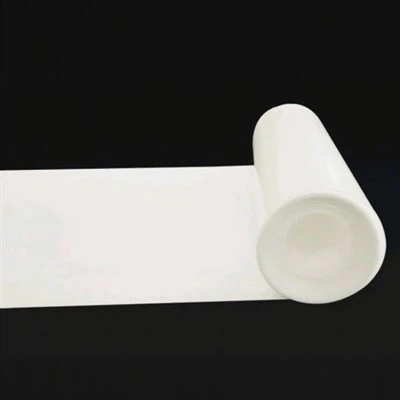
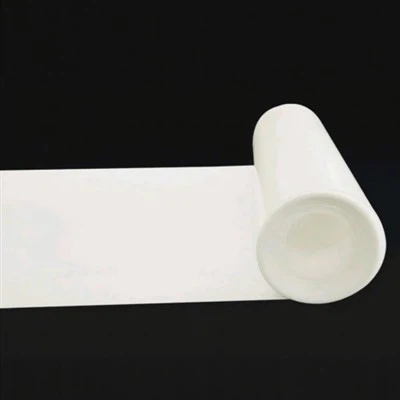
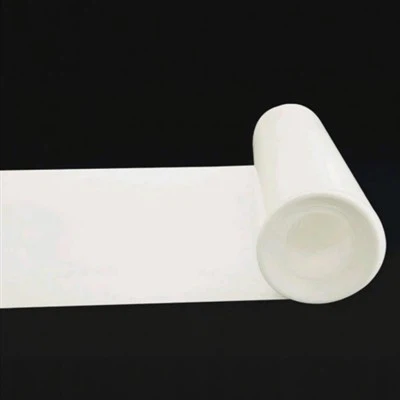
PTFE plate is made of a high molecular weight fluoropolymer named Polytetrafluoroethylene, commonly referred to as PTFE. PTFE is a fluorocarbon, meaning it consists wholly of carbon and fluorine bonds and it is non-reactive in part because of the strength of the carbon-fluorine bonds. PTFE plate material is hydrophobic, and it possesses excellent thermal and electrical insulating properties. It has a high tensile strength. PTFE has one of the lowest coefficients of friction out of any solid. This material is highly versatile and is often referred, a PTFE based formula material that is oftentimes synonymous with non-stick coated cookware. It is preferred by the building and construction industry for its strong non-reactive nature and used to make containers and piping where reactive corrosive chemicals may come into contact with pipes. Valves and fittings are commonly made of PTFE plate. It is also UV resistant. The high technology sector also uses PTFE and the earliest computers and cables utilized PTFE plate to insulate wires. PTFE is available in PTFE plate, rod, or tube in a variety of sizes and grades. It is also available in films and flexible tubing.
Advantages of PTFE Plate
Thermal properties
PTFE plate is well-known for its thermal properties. It can withstand temperatures ranging from -200℃ to +260℃, which makes it suited for high temperature as well as cryogenic temperatures. The PTFE plate machined parts can withstand ambient temperatures without sacrificing their form or performance. This material has a high melting point of 327℃.
Easy to clean
Teflon machined parts are easy to wipe and clean. Being hydrophobic, PTFE plate thwarts liquid particles that may stick to its surface. Thus, Teflon machined parts are chosen for applications where they may come in contact with water or other liquids.
Electrical properties
The material exhibits excellent electrical properties such as low dielectric constant and high insulation resistance. The dielectric constant of the material is 2.0 and the macromolecules possess a highly symmetric structure.
Chemical resistance properties
This material possesses excellent chemical resistance. Although it can resist most chemicals, PTFE plate cannot withstand alkali metals, organic halogenated compounds such as oxygen difluoride, chlorine trifluoride, and gaseous fluorine at high pressures and temperatures. Owing to its chemical resistance, PTFE plate is used as coating for parts, surfaces, and components to resist corrosion and rust.





Why Choose Us
Our factory
The factory is located in Yancheng, the beautiful coast of the Yellow Sea. Founded in 2007, it has 150 sets of special equipment and 100 special pipelines. The factory continues to operate in ISO9001:2000 quality system.
Advanced technology
With strong technical force, there are more than 20 middle and senior technicians in undergraduate and junior colleges. The design adopts the most advanced Japanese technology, and the research and development speed is fast, which can meet the various needs of customers.
Wide range of applications
The pipes produced by Tongtong are mainly used in the fields of machinery, chemical industry, aviation, electrical and electronics, national defense industry, cutting-edge technology, medical and electrical insulation and electrical insulation.
Our produce
The existing PTFE tubes, PTFE Plates , PTFE gaskets, PTFE Fittings and Equipments, and has the ability to develop and produce various PTFE products. Excellent products are praised by customers at home and abroad.
1.Industrial plants
PTFE's resistance to water and other water-based substances makes is easier for use in industrial plants dealing with such materials. PTFE envelope gasket and PTFE packing prevent contamination and leakage of the substances that are being managed at industrial plants. Also, PTFE material makes it easier for fluids to flow easily in the piping industry.
2.Medical laboratories
PTFE is non-reactive and anti-corrosive in nature. This feature of PTFE makes it an ideal material to be used in pipes and containers for laboratories where chemicals with extremely corrosive nature are handled.
3.Construction
PTFE's resistance to environmental changes makes it a suitable material in the construction industry. PTFE plate manufacturers also use it to make envelope gaskets because of its strength and heat resistance. It is also used as a thread seal tape for plumbing. For architectural purposes, PTFE plate are used because of its low frictional quality which can extend the life of the construction. This, in turn, reduces the costs of manufacturing and construction.
4.Food industry
The dairy and beverage industries benefit from PTFE packing and PTFE envelope gaskets too. PTFE is popular in the food industry as it does not contaminate the liquids which flow through it.
5.Highly reactive substances
PTFE plate are used for lining the acid tanks because they are highly resistant to acids. The high resistance feature make PTFE plate manufacturers sought after by producers of acid tanks and other allied products for aggressive liquids and substances.
6.Electrical industry
The electrical industry also has uses for PTFE plate because they are considered excellent for insulation. This feature enables electrical industry professionals to utilise PTFE for insulation of connector assemblies and cables. Electrical products made using PTFE material can be coaxial cable, hookup wire, and printed circuit boards.
7.Lubricant for various applications
PTFE doubles as an effective lubrication for machinery. Whenever utilized in this manner, PTFE lessens energy usage, reduces friction, and leads to minimum equipment wear. For example, PTFE acts as a lubricant for bicycle chains. PTFE packing and PTFE envelope gaskets have the attribute of simple application and reduced maintenance cost. PTFE withstands attacks from aggressive chemicals ensuring operational safety. Greater electrical performance is an additional advantage of PTFE moulded components. PTFE also cuts down on the possibility of media contamination at industrial plants.

PTFE plate is a thermoplastic polymer, which is a white solid at room temperature, with a density of about 2200 kg/m3 and a melting point of 600 K (327 ℃; 620 ℉). It maintains high strength, toughness and self-lubrication at low temperatures down to 5 K (−268.15 ℃; −450.67 ℉), and good flexibility at temperatures above 194 K (−79 ℃; −110 ℉).[21] PTFE plate gains its properties from the aggregate effect of carbon-fluorine bonds, as do all fluorocarbons. The only chemicals known to affect these carbon-fluorine bonds are highly reactive metals like the alkali metals, at higher temperatures such metals as aluminium and magnesium, and fluorinating agents such as xenon difluoride and cobalt(III) fluoride. At temperatures above 650–700 ℃ (1,200–1,290 ℉) PTFE plate undergoes depolymerization. However, it begins to decompose at about 260 ℃ (500 ℉) through 350 ℃ (662 ℉), and pyrolysis occurs at temperatures above 400 ℃ (752 ℉).
The coefficient of friction of plastics is usually measured against polished steel. PTFE plate's coefficient of friction is 0.05 to 0.10, which is the third-lowest of any known solid material (aluminium magnesium boride (BAM) being the first, with a coefficient of friction of 0.02; diamond-like carbon being second-lowest at 0.05). PTFE plate's resistance to van der Waals forces means that it is the only known surface to which a gecko cannot stick. In addition, PTFE plate can be used to prevent insects from climbing up surfaces painted with the material. For example, PTFE plate is used to prevent ants from climbing out of formicaria. There are surface treatments for PTFE plate that alter the surface to allow adhesion to other materials.
Because of its chemical and thermal properties, PTFE plate is often used as a gasket material within industries that require resistance to aggressive chemicals such as pharmaceuticals or chemical processing. Therefore, it has no "memory" and is subject to creep. Because of the propensity to creep, the long-term performance of such seals is worse than for elastomers that exhibit zero, or near-zero, levels of creep. In critical applications, Belleville washers are often used to apply continuous force to PTFE plate gaskets, thereby ensuring a minimal loss of performance over the lifetime of the gasket. PTFE plate is an ultraviolet (UV) transparent polymer. However, when exposed to an excimer laser beam it severely degrades due to heterogeneous photothermal effect.
Manufacturing Process For PTFE Plate
1.Cold compression moulding / sintering process
PTFE plate are manufactured by cold compression moulding / sintering process. PTFE Resin is cold compressed / compacted in mould at around 300 kg/cm² & PTFE Resin is mechanically bonded due to its waxy nature to form product. The product is ejected from mould & then sintered in Oven at about 370°C to form rigid - chemically bonded polymerized - shape by fusion of individual PTFE particles. The product is then cooled in a controlled manner to give the moulded PTFE article.
2.Ram extrusion process
PTFE plate are manufactured by Ram Extrusion Process. Ram Extrusion is a method of operating the process to produce continuous lengths of extrudate. PTFE free flow resin is continuously fed into one end of straight die tube of uniform bore, where it is compacted @ 200 kg/cm² by ram & forced along the die tube, incorporating a heated sintered zone of @ 375°C. The ram is then withdrawn, the die tube re-charged with resin & cycle repeats. In this way, the compacted powder is forced step by step through heated zone of die tube & sintered & then through cooler section, it emerges as continuous sintered PTFE Extrudate.
3.Isostatic moulding/ sintering process
PTFE products having complex shapes are manufactured by Isostatic moulding / sintering process. The Isostatic compaction of PTFE consists of filling a flexible mould made out of Rubber / Polyurethane with Free Flow Granular PTFE Resin, closing & sealing the flexible mould, inserting this mould in a fluid contained by a Pressure Vessel, sealing the vessel & pressuring the fluid @ 350 kg/cm². The process is completed by dwelling at pressure, decompression, removal of mould from the vessel & finally removal of preformed PTFE article from the mould. The PTFE perform is then sintered in oven at @ 375 kg/cm² to effect fusion of individual PTFE particles.
4.Paste extrusion process
PTFE long length, flexible Tubings of thin wall sections are manufactured by Paste Extrusion Process. The process involves addition of Hydrocarbon oil to PTFE Resin to assist lubrication to extrusion. The mixture is later pressed lightly @ 25 kg/cm² into billet or performs & then forced through die of constant rate Ram Extruder. The lubricant is then removed by heating & sintered in oven @ 350°C usually in continuous long length oven inline with Paste Extrusion to form sintered tubing. PTFE un-sintered Ropes for Gasketing are also manufactured by this process & used without sintering to make use of its resilient nature.
5.Hot coining process / heat shaping
PTFE products having very complex & complicated & fine design are manufactured by coining process. The coining process is carried out on PTFE sintered articles. The PTFE article, usually in gel state @ 350°C is transferred to coining die having reverse product shape & pressed at pressure @ 350 kg/cm² & cooled under pressure. The article is then ejected from mould as almost ready to use after slight finishing. The coining process is used not only to make fine adjustment to dimensions & shape, but also to change the shape radically from the original form.
6.Skiving / peeling process
PTFE films & plate of flexible nature, of continuous length / Roll form are manufactured by Skiving / Peeling process. The Skiving / Peeling process is carried out on sintered PTFE billet. The splined steel Arbor is inserted into PTFE billet & the assembly is mounted on Rotary Lathe like Skiving / Peeling Machine & rotates at @ 20-30 RPM. The cutting blade/ knife mounted on Rigid cross slide is advanced towards the billet at constant speed to peel off the continuous film / plate of PTFE of constant thickness. The variety thicknesses ranging from 0.1mm, even upto 8mm can be peeled / skived off by increasing the speed of advancing cross slide on rotating PTFE billet / steel arbor assembly.
7.PTFE coating process
Products manufactured by PTFE coating process are basically for non-stick applications. Generally mild steel, stainless steel & other nonferrous articles are surface treated such as shot blasting, polishing & sprayed PTFE aqueous solution by Air / Pneumatic spray gun. These articles then air-dryed & put inside oven for sintering & bonding of coated PTFE layer of max 0.2mm @ 300°C. The articles are cooled slowly to avoid any rapture of coated layer.
The two most common methods of bonding PTFE plate are the use of contact adhesives and chemical etching. Each method has its advantages and disadvantages, but ultimately the application will determine which method is suitable.
The simplest means of bonding PTFE plate is with contact adhesives—most often in the form of pressure-sensitive adhesives. Proper contact adhesives will adhere to the surface of the PTFE plate, but the bond is very weak and often short-lived. Roughing up the surface of the PTFE plate may slightly enhance adhesion, but not to any appreciable extent. Nevertheless, pressure-sensitive adhesives (usually in the form of PSA-backed tape) are suitable for certain applications where load and wear are not critical concerns.
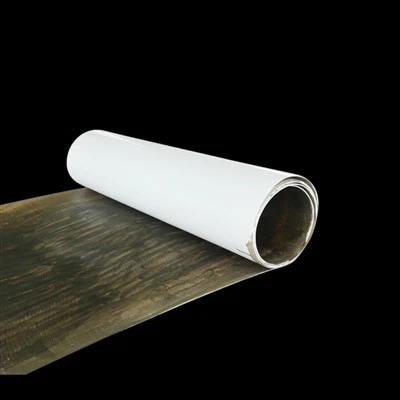
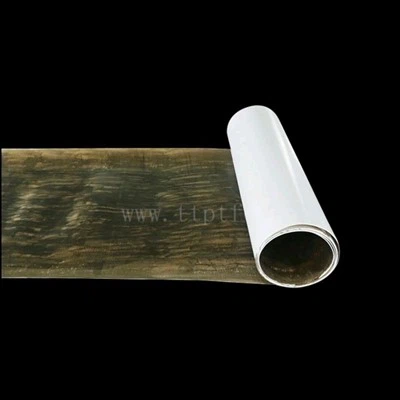
Since the lubricity of PTFE plate is the result of its chemical structure—a fluorine sheath covering a chain of carbon atoms—an alteration of this chemical structure is necessary to attain true adhesion with a strong bond. This can be achieved by chemically etching one or more surfaces of the material. In chemical etching, the PTFE plate is brought into contact with sodium naphthalene (or another etchant), by either dipping the PTFE plate into a tank or applying the etchant to the surface of the PTFE plate. As sodium naphthalene is derived from sodium, an alkali metal, it chemically reacts with the PTFE plate, removing the fluorine atoms from the PTFE plate molecules. Because the fluorine sheath is responsible for the lubricity of PTFE plate, removing most of the fluorine from the surface essentially removes this property, allowing the surface to be adhered to virtually any substrate.

Availability of Etched PTFE Plate
Etched PTFE plate is available both as a stock item and etched-to-order. Due to the relatively short shelf life of etched PTFE plate, we generally only stock a limited quantity of the most popular sizes of etched plate. For all other etching requirements. PTFE plate can be etched on one or both sides, depending on the requirements of the application. It stocks a selection of etched plate from .030–.250 inches thick in both virgin and 25% glass-filled PTFE plate. Other thicknesses of etched plate are available upon request.
Like PTFE plate, PTFE plate film can be etched on one or both sides. Due to the short shelf life of etched material and the wide variety of film thicknesses and custom-slit widths available. However, we are able to fulfill most custom etched film orders within a few weeks. Etched PTFE plate tube and rod are less common than etched plate and film, but are available for custom order. Generally, only a small area around the end of the tube is etched so that it can be bonded to a part or vessel. Of course, other applications may have different etching requirements and these can be accommodated as well.
Sometimes etching is required on one or more surfaces of PTFE plate parts so that the part can be bonded to other pieces of an assembly. Lead times for etched parts are highly dependent on the complexity of the part and the quantity ordered. While untreated PTFE plate can be difficult or impossible to bond, chemical etching is a readily available process that enables strong adhesion, broadening the number of applications in which PTFE plate can be used.
FAQ