


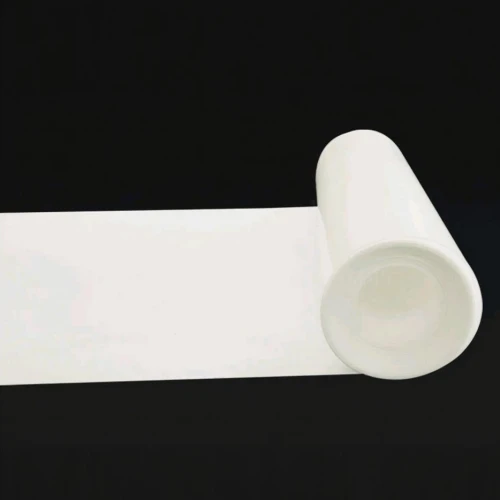
Teflon PTFE Plate
Yancheng Tongtong Industrial Technology Co.,Ltd
Most of the pipes designed and developed by Yancheng Tongtong Fluorine Plastic Manufacturing Co.,Ltd. are mostly supplied by OEMs to the UK, France, the United States, Germany and many other companies. The factory is located in Yancheng, the beautiful coast of the Yellow Sea. Founded in 2007, it has 150 sets of special equipment and 100 special pipelines. The factory continues to operate in ISO9001:2000 quality system. With strong technical force, there are more than 20 middle and senior technicians in undergraduate and junior colleges. The design adopts the most advanced Japanese technology, and the research and development speed is fast, which can meet the various needs of customers.
Why Choose Us
Our factory
The factory is located in Yancheng, the beautiful coast of the Yellow Sea. Founded in 2007, it has 150 sets of special equipment and 100 special pipelines. The factory continues to operate in ISO9001:2000 quality system.
Advanced technology
With strong technical force, there are more than 20 middle and senior technicians in undergraduate and junior colleges. The design adopts the most advanced Japanese technology, and the research and development speed is fast, which can meet the various needs of customers.
Wide range of applications
The pipes produced by Tongtong are mainly used in the fields of machinery, chemical industry, aviation, electrical and electronics, national defense industry, cutting-edge technology, medical and electrical insulation and electrical insulation.
Our produce
The existing PTFE tubes, PTFE Plates , PTFE gaskets, PTFE Fittings and Equipments, and has the ability to develop and produce various PTFE products. Excellent products are praised by customers at home and abroad.

PTFE steel lined reducing pipe is a special pipe fitting that combines the mechanical strength of carbon steel with the chemical stability of PTFE. Such fittings are commonly used in industrial piping systems that require high corrosion and wear resistance, especially where pipe diameters need to be changed.

Tongtong professionally developed Teflon PTFE sheets offer an array of advantages that make them highly valuable across diverse industries.

The unique properties of Teflon PTFE Sheets, such as chemical resistance, high-temperature stability, low friction, excellent electrical insulation, non-stick surface, biocompatibility, and weather resistance, make them indispensable in a wide range of industrial, commercial, and medical applications.

PTFE Teflon Sheet for Slide Plate
By adding different fillers, the PTFE filler can meet the higher performance requirements in specific industrial applications, thus expanding the application range of PTFE materials.

Thickness PTFE Plate Teflon Plate
PTFE sheets, usually referred to as a sheet made of PTFE, has a range of unique physical and chemical properties that make it widely used in a wide range of industries.

High wear-resistant (PTFE) plate usually refers to PTFE plate that has been specially treated or added with certain fillers to improve its wear resistance.

PTFE Teflon Sheet, especially for Slide plates, is a high-performance engineering plastic that is favored in a variety of industrial applications due to its unique physical and chemical properties.For more high quality Virgin Material PTFE Plate information, please contact Tongtong Industrial Technology!

Sodium PTFE plate usually refers to the sodium treatment of PTFE plate, this material because of its unique chemical and physical properties, is widely used in chemical, mechanical, electronic, electrical, military, aerospace, environmental protection and Bridges and other fields.

PTFE sheets, usually referred to as a sheet made of polytetrafluoroethylene (PTFE), has a range of unique physical and chemical properties that make it widely used in a wide range of industries.
What is Teflon PTFE Plate
Teflon PTFE plate are plastic polymers that can be used in a variety of different ways. PTFE, or polytetrafluoroethylene, is a synthetic plastic polymer. It is most commonly known as Teflon. PTFE plate are corrosion and heat-resistant, non-stick, and durable. PTFE plate are a type of plastic plate made from a compound of polytetrafluoroethylene. They are often used as a non-stick surface because PTFE is a good lubricant and does not melt at high temperatures. PTFE plate can also be used in electrical insulation, as they are stable and non-flammable up to 260 degrees Celsius.PTFE has a variety of applications because of its unique properties. It is chemically inert, meaning it does not react with other substances, and it is very slippery. This makes it an ideal material for coatings, sealants, and lubricants.
Advantages of Teflon PTFE Plate
Durability
One of the significant advantages of PTFE plate is its durability. It is highly resistant to chemicals, weather, and temperature changes, making it ideal for applications that require robust materials that can withstand harsh conditions. This durability allows for PTFE plate to have a long lifespan, reducing the frequency of replacement and the impact on the environment.
Non-stick properties
Another advantage of PTFE plate is its ability to be non-stick. This property has made it widespread in cookware applications, as it reduces the need for cooking oil and other lubricants. This can lead to healthier cooking practices and can reduce the chances of burns and other kitchen accidents.
Electrical insulation
PTFE plate is an excellent electrical insulator due to its high dielectric constant, meaning it can resist electric charge buildup. This property makes it the perfect choice for high-voltage applications in electrical engineering.
Chemically resistant
PTFE plate is highly resistant to chemicals, including acids, bases, and solvents. This property makes it an excellent choice for applications that require contact with aggressive chemicals. Its resistance to chemicals also makes it safe for use in a variety of medical equipment.
Low friction
The low coefficient of friction of PTFE plate is another significant advantage. This property allows for smooth movements and reduces wear and tear, resulting in less need for maintenance and replacement. This makes it a preferred choice in applications such as mechanical seals and bearings.
Versatility
A variety of PTFE plate are available. Materials reflect different manufacturing processes and compounds, resulting in materials with different cost and performance characteristics. The most suitable PTFE plate can be selected based on performance and cost differences.
How to Choose Between Molded and Skived Teflon PTFE Plate
PTFE plate is a versatile material which has enjoyed great popularity due to its unique properties including excellent resistance to high temperature, chemical resistance, low coefficient of friction, excellent insulation properties. They are widely used in various applications such as electrical insulation, seals, gaskets, lining and so on. When looking for PTFE plate, you may come across the terms "molded" and "skived."
Molded PTFE plate is made by pouring the PTFE resin into a mold and then heating it to a high temperature under high pressures in order to set it into shape. This process can create a solid plate with uniform thickness and density. Molded PTFE plate has smooth surface and excellent mechanical properties. Molded PTFE plate tend to be thicker than skived plate, due to the compression process, they exhibit superior tensile strength, making them suitable for heavy-duty applications where high mechanical stress is required.
Skived PTFE plate, on the other hand, is made by slicing or cutting a thin layer off a larger block of compressed resin using a special skiving machine. This results in a much thinner plate compared to molded ones. Skived PTFE plate can be cut and shaped into any size or shape as required. This flexibility makes them ideal for intricate applications where tailor-made fit is necessary. However, skived PTFE plate do have some limitations such as reduced tensile strength, some certain defects like uneven edges or micro tears may occur. Therefore, they may not be suitable for heavy-duty applications.
We can conclude that the primary difference between molded and skived PTFE plate is in their physical properties. Molded plate have a higher density and uniform consistency, which gives them improved mechanical strength, higher creep resistance, and better resistance to thermal expansion than skived plate. Skived PTFE plate have a slightly lower density and a rougher surface texture, but are more flexible, easier to manipulate, and more cost-effective.
How to choose between molded and skived PTFE plate?
When choosing between molded and skived PTFE plate, it is important to consider the specific properties needed for your applications. Molded plate are preferred due to their superior strength properties for applications demanding high tensile strength and dimensional stability under mechanical stress. On the other hand, applications that require precise thickness control or customized fitting, skived plate will be more suitable due to their flexibility.
(1) Disperse PTFE resin in a refrigerator at a temperature of 15℃ for 24 hours, and then screen it through an 8-mesh sieve.
(2) Mix the screened PTFE resin with a promoter and let it stand for 2 hours, then stir for 14 minutes at a mixing temperature not exceeding 19℃. Let it stand for 24 hours. The weight ratio of PTFE resin and promoter is 75-80 to 18-22, respectively. The promoter can be a mixture of kerosene solvent oil, petroleum ether, or paraffin oil.
(3) Perform curing treatment in a curing box at a temperature of 50-60℃ for about 20-36 hours. The preferred curing temperature is 55℃ and the curing time is 25 hours.
(4) Preform to obtain a cylindrical blank; the performing pressure is 28-29kg/cm2 and the diameter of the blank cavity is about 1mm smaller than that of the extrusion cavity.
(5) Extrude with a die with a cone angle of 38-48 degrees and a compression ratio of 60-200. Control the temperature of the die cavity at 50℃-70℃.
(6) Calendar with a two-roll calendar, controlling the roller temperature at 50℃-70℃ and the calendar speed at 1-3m/min.
(7) Degrease with a new integrated raw material strip stretching machine, controlling the temperature at 100℃-200℃.
(8) Biaxially stretch the degreased film with a specialized biaxial stretching device at a temperature of 200℃-350℃, and control the drawing rate at 0.5-5m/min.
(9) Composite molding: superimpose multiple biaxially stretched films and composite them at a temperature of 300℃-380℃. Compress the biaxially stretched films added to 85%-95% of their original thickness.
(10) Shape and trim at a temperature of 100-200℃. Shape and trim the composite molded plate.
General Notes on Bonding Teflon PTFE Plate to Metals
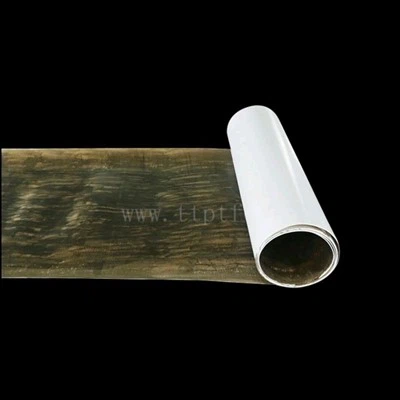
Appearance: PTFE is white in color and does not bond to surfaces unless it is chemically treated (etched) using a special process. The formulation of the chemical etchant is proprietary, with each processor using a method that suits them best. Once etched, the surface of the PTFE changes color to brown. This brown surface can be bonded easily using standard industrial grade adhesives.
Surface preparation: The metal surface to be mounted with PTFE can be prepared by the normal machining methods such as grinding, milling, shaping, and planning. The surface roughness of all forms of preparation should be preferably between Ra = 1.6 µm and Ra = 3µm and not more than Ra = 6µm. Once roughened the surfaces can be cleaned with trichloroethylene, perchloroethylene or acetone. As with any bonding process, we would need to ensure the surface of the metal is free from grit and debris.
Bonding PTFE: For bonding of PTFE the following resin adhesive can be used: Araldite - Hardener - HV 953U; Araldite AW106. The Araldite should be applied both to metal and PTFE plate and be spread as uniformly as possible by means of a serrated spatula. To obtain the best dispersion of the adhesive, when spreading on the surface brush in the longitudinal direction; when spreading on the metal, brush in the transverse direction. The total quantity of bonding should be approximately 200gm per sq. mt.
Other bonding agents can also be looked into, but usually a good industrial grade agent would be recommended.
Hardening: After mounting the PTFE a clamping pressure of between 10-15 Kg/cm2 is recommended. It is important to keep the pressure constant during the hardening process. Due to the differences in the thermal expansion coefficient of the materials, maximum curing temperature should not exceed 40°C. The hardening times for various temperatures are 20°C min 15 hours; 25°C min 12 hours; 40°C min 5 hours.
Finishing: After curing of the adhesive, the PTFE can be machined by conventional means – if required. The choice depends on the machinery available viz.: grinding; grindstone.
Grinding: For grinding of PTFE use the same speed as grinding cast iron, taking care that sufficient cooling is used with an 'open stone'. The grindstone should be preferably silicon carbide based with rubber or polyurethane binding; grain size 80-30. Alternatively, aluminum oxide with rubber bonding may also be used for soft, fine grinding action, pre-polishing and pre-mating treatment.
Oil Grooves: PTFE pads can be machined with oil grooves using the same methods and cutting data as used for cast iron. The form and depth of the oil grooves are optional. However, the oil grooves should never pierce through the PTFE. Oil grooves should be away from the edges by 6mm.
Maintenance: Bonded PTFE must be maintained, as the strength of the bond can be impacted by adverse environmental factors such as excessive sunlight, corrosion, and heat. Temperatures around the bonded areas should not exceed 120°C, while any presence of corrosive elements – such as sea-air and/or chemical fumes can – affect the metal surface and eat into the bond. Usually, when exposed to adverse elements, the bond strength can get affected along the edges and any corrosion along the metal can slowly eat its way into the middle.
In such a case, the bond can be reapplied along the edge of the plate after cleaning any debris/rust from the affected area. However, care must be taken to apply a protective coating around the bonded area to ensure long-term functionality.
Application of Teflon PTFE Plate
Medical industry
Its exceptional chemical resistance, biocompatibility, and low friction properties make it an ideal choice for medical devices, implants, and pharmaceutical applications. The enhanced bond strength further ensures the longevity and reliability of medical instruments while providing an additional layer of safety to patients.
Automotive industry
In the automotive industry, the PTFE plate offers a multitude of advantages. Its low coefficient of friction aids in reducing wear and tear between moving components, thereby enhancing the overall efficiency and lifespan of the vehicles. Its chemical resistance makes it an excellent choice for gaskets, seals, and electrical insulation, ensuring optimal performance in various automotive applications.
Aerospace sector
In the aerospace sector, the PTFE plate provides an innovative solution for critical applications. Its ability to withstand extreme temperatures, resist corrosion, and maintain mechanical integrity even in harsh environments is paramount in aerospace engineering.
Electronic industry
PTFE boards are widely used in electronic and communication equipment, such as insulating gaskets, capacitor fillers and connector gaskets. It has excellent electrical insulation properties and high temperature resistance.
Construction industry
The construction industry also benefits from the versatility of PTFE plate. It is commonly used as a non-stick lining in concrete moulds, preventing any sticking and ensuring easy removal. The PTFE plate acts as a barrier between the concrete and the mold, eliminating the need for extensive cleaning and increasing productivity.
Textile and food industries
The textile and food industries take advantage of the non-stick properties of PTFE plate. In textile manufacturing, PTFE plate are used as conveyor belts or release liners during the heat setting process to prevent fabrics from sticking to heating elements. In the food industry, PTFE plate are used as non-stick coatings on bakeware and cookware, ensuring food does not stick to the surface and is easy to clean.
How to Properly Store Teflon PTFE Plate
Storage environment
PTFE plate should be stored in a dry, ventilated, and dark environment. Excessive humidity will cause the PTFE plate to absorb moisture and affect its performance; while excessive temperature will cause it to deform or age.
Packaging method
When storing PTFE plate, sealing and packaging should be used as much as possible to prevent dust, impurities and other substances from adhering to the surface of the board and affecting its quality. Sealed packaging can also prevent moisture and oxygen in the air from entering, slowing down the aging rate of PTFE plate.
Dust prevention measures
During the storage of PTFE plate, dust prevention measures should be taken. If there is dust or impurities on the surface of the board, wipe it gently with a soft cloth or gauze, and do not scratch it with sharp objects.
Light protection requirements
Long-term exposure of PTFE plate to sunlight will cause them to yellow and deteriorate, so they should be stored away from light as much as possible. The place where PTFE plate are stored should have light-shielding measures to avoid direct sunlight, especially ultraviolet radiation.
Storage method
To save space and facilitate management, PTFE plate can be stored vertically. When storing PTFE plate, attention should be paid to the flatness and uniformity of the boards to avoid deformation caused by concentrated stress. Gaps between panels should be maintained to facilitate ventilation and observation.
FAQ
Hot Tags: teflon ptfe plate, China teflon ptfe plate manufacturers, suppliers, factory, ptfe plate for welding, ptfe sodium sheet, ptfe plate for supply management, ptfe plate for construction, ptfe plate for electronics, ptfe plate for chemical industry
Previous
No InformationYou Might Also Like




Send Inquiry