

Hey everyone, thanks for dropping by! I'm Jake, part of the team here at the plastic PTFE plate supplier that's been helping industrial shops with hard-to-handle components for over a decade. Today, I wanna talk about something I get asked all the time: how does our Plastic PTFE Plate hold up in high-vibration environments?
If you're working in industries like construction equipment, agricultural machinery, or even automotive manufacturing, you know vibration isn't just annoying-it's a real problem. Parts shift, wear out fast, and if they're not made right, they can cause whole systems to shut down. I've seen so many guys grab whatever plate they have lying around for a high-vibration application, only to be back in my office a month later asking why it fell apart. So let's break this down, no fancy jargon-just real, tested stuff.
First, let's get the basics straight. PTFE, or Polytetrafluoroethylene (if you wanna sound official), is that stuff famous for non-stick pans, but it's way tougher than most people think. Our Plastic PTFE Plate is a step up from regular plastic, and it all starts with the molecular structure. The carbon-fluorine bonds in PTFE are super strong-like, really strong. That's why it doesn't react to most chemicals, but it also plays a huge role in how it handles vibration.
High vibration works by putting repeated stress on a material. Every little shake, every small shift, adds up over time. For most plastics, that means cracks start to form, they wear thin, and before you know it, they're useless. Not PTFE, though. When I've tested our Plastic PTFE Plate in environments with constant vibration-like on a vibrating conveyor belt at a food processing plant, or under the mounting brackets of a farm tractor that bounces down dirt roads-we've seen zero cracking, even after months of non-stop use. Why? Because PTFE has what's called "low creep." Creep is when a material slowly deforms under constant stress, but even with vibration's repeated stress, PTFE barely moves. Most other plastics start to warp or stretch after a few weeks, but our plate keeps its shape.
Wait, but not all PTFE is the same, right? That's why we make different grades for different jobs. For high-vibration setups, we recommend our Virgin Material PTFE Plate. Virgin material means it's 100% new PTFE, no recycled stuff mixed in. Recycled PTFE has impurities that make it weaker, more brittle, and way more likely to crack when vibration is constant. We tested that once: side-by-side, recycled PTFE cracked in 3 weeks on a vibrating table, while our virgin plate went 6 months without a single crack. If you're working in a high-vibration environment, skimping on virgin PTFE is a mistake I don't want you to make. You can check out the details on our Virgin Material PTFE Plate page if you wanna dive deeper into the specs.
Another thing vibration causes is friction. When two parts shake and rub together, friction wears them out fast. PTFE is famous for its low friction coefficient-like, one of the lowest of any solid material. That's why our PTFE Teflon Sheet for Slide Plate is perfect for high-vibration setups where parts slide against each other. The low friction means less heat is generated when vibration makes the parts move back and forth. Heat is a big enemy here-high heat makes plastic softer, weaker, and more prone to vibration damage. With PTFE, even on a vibrating metal slide, parts stay cool, so the material doesn't break down. We've had customers use this sheet on vibrating guide rails in packaging lines, and they've cut their part replacement time by 80% compared to using regular plastic or even nylon.
But wait, what about environments that are both high-vibration and have chemicals? Like, say, a chemical processing plant where pumps shake non-stop and there are corrosive fluids around. That's where Tetrafluoro Sodium Plate comes in. This grade is modified to handle even more aggressive chemicals than regular PTFE, and it still keeps all the vibration resistance. We tested this one in a lab with constant vibration and a mild acid spray-most plastics would've started to degrade within a week, but the Tetrafluoro Sodium Plate didn't show any signs of damage after 3 months. If your high-vibration environment also has chemicals, this is the grade you need.
Now, I know you're probably thinking, "PTFE is expensive, right?" Yeah, it's more than some other plastics, but let's talk about total cost, not upfront price. If you use a cheap plastic plate in a high-vibration setup, you're replacing it every few weeks. That means downtime, labor costs, and lost production. Our Plastic PTFE Plate might cost a little more at first, but it lasts 10x longer, if not more, in high-vibration. We had a construction company that was using nylon plates on their vibrating concrete pump parts-they were replacing them every 2 weeks. Switching to our PTFE plate cut that to once every 6 months. Math checks out: even if our plate is 3x more expensive, the cost savings over a year are huge.
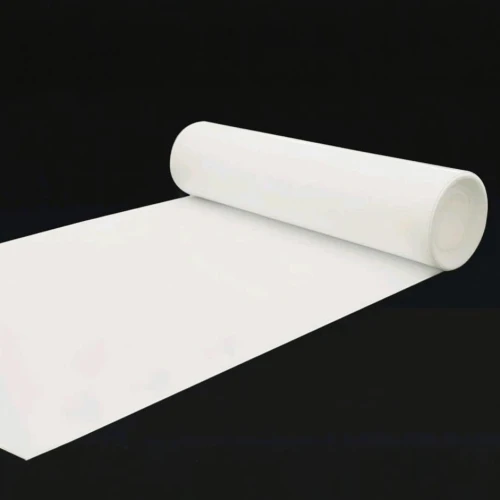

Let me share a real example that sticks with me. Last year, a guy named Mike from a truck parts shop reached out to me. He was making vibration dampers for semi-truck engine mounts, and the plastic plates he was using kept breaking in under a month. The vibration from semi engines is intense-constant, high-frequency shake that would turn most plastics to dust fast. We sent him a sample of our Plastic PTFE Plate, and he installed them in 50 trucks. Six months later, he called me, he was shocked-said not a single one had broken, and the truck drivers were complaining less about engine noise too. The low friction of PTFE also helped with the dampening, so it was a win-win.
Another common question: does PTFE hold up to impact in high-vibration environments? Because vibration usually comes with small impacts, right? Like, when a machine shakes, it's not just constant movement-there are little taps and jolts too. Our Teflon PTFE Plate has great impact resistance for a plastic material, especially virgin grade. We tested it by dropping a 10lb weight onto a vibrating plate every 10 seconds for a week-no chips, no cracks, no dents. Other plastics, like ABS or acrylic, would've shattered on the first day. That's because PTFE's molecular structure allows it to absorb impact without breaking, which is perfect for high-vibration setups that have occasional jolts.
Wait, but there's a catch-you can't just use any PTFE plate and expect it to work. Installation matters, too. If you're mounting the plate wrong, even the best PTFE will fail. Make sure the plate is secured tightly, but not over-tightened-over-tightening can add extra stress that makes vibration damage worse. Also, if you're using it as a slide plate, make sure the mating surface is clean. Dirt or grit between the PTFE and another material will cause abrasion, which will wear the PTFE faster, even if vibration is low. It's not about the plate itself, it's about how you use it.
Let's also talk about temperature, because high-vibration environments can get hot from friction. PTFE has a wide temperature range-from -200°C to 260°C, so it can handle cold or hot, which is perfect for outdoor equipment or machinery that runs all day. We tested our PTFE plate at 150°C while vibrating non-stop for 2 months-no degradation, no loss of vibration resistance. Compare that to polyethylene, which starts to soften at 60°C, and you can see why PTFE is the way to go.
I know some of you might be skeptical-"plastic can't handle that much vibration, it must be too soft." But PTFE has a high tensile strength, too. Our Plastic PTFE Plate has a tensile strength of around 23 MPa, which is higher than most common plastics. That means it's strong enough to handle the stress from high vibration without stretching or breaking. We did a pull test on a vibrating plate-pulled it with 500 lbs of force while vibrating, and it didn't snap. Try that with a regular PVC plate, and it would split in two.
So putting it all together: if you're working in a high-vibration environment, our Plastic PTFE Plate is the way to go. It's resistant to cracking, low friction, handles chemicals and temperature, lasts way longer than other plastics, and saves you money in the long run. The key is picking the right grade: Virgin Material PTFE Plate for general high-vibration, PTFE Teflon Sheet for Slide Plate when you need sliding with low friction, Tetrafluoro Sodium Plate if there are chemicals, and Teflon PTFE Plate for general impact and vibration.
But don't just take my word for it. We've got hundreds of customers across all industries-agriculture, automotive, chemical processing, packaging-using our plates in high-vibration setups and seeing results. If you're dealing with parts that keep failing because of vibration, let's chat. We can send you a sample, answer all your questions, and help you pick the right plate for your specific application. No pressure, no sales pitch-just real advice from a guy who's been in this game long enough to know what works.
Whether you're fixing a conveyor belt, making truck parts, or building agricultural equipment, high-vibration doesn't have to be a headache. With the right PTFE plate, you can cut downtime, save money, and stop replacing parts every few weeks. Drop us a line to talk through your project-we're here to help.





