

Hey there! As a supplier of PTFE molded pall rings, I'm super excited to chat with you about their heat transfer performance. You might be wondering, what exactly makes these little rings so special when it comes to heat transfer? Well, let's dive right in!
Understanding PTFE Molded Pall Rings
First off, let's get a quick lowdown on what PTFE molded pall rings are. PTFE, or polytetrafluoroethylene, is a synthetic fluoropolymer that's known for its incredible chemical resistance, low friction, and high melting point. When we mold it into pall ring shapes, we get these nifty little structures that are widely used in various industrial applications, especially in distillation, absorption, and stripping processes.
The unique design of the pall ring, with its open structure and numerous perforations, allows for a large surface area for contact between the gas and liquid phases. This is crucial for efficient heat transfer, as it enables better mass transfer and heat exchange between the two phases.
Heat Transfer Mechanisms
There are three main mechanisms of heat transfer: conduction, convection, and radiation. In the case of PTFE molded pall rings, conduction and convection play the most significant roles.
Conduction
Conduction is the transfer of heat through a solid material. PTFE has a relatively low thermal conductivity compared to metals, but it still allows for some heat transfer within the ring itself. The heat is transferred from the hot side of the ring to the cooler side, and this process is influenced by the thickness and density of the PTFE material.
Convection
Convection is the transfer of heat through the movement of a fluid (either gas or liquid). In a packed column filled with PTFE molded pall rings, the fluid flows through the open spaces between the rings, creating a turbulent flow. This turbulent flow enhances the heat transfer by increasing the contact between the fluid and the surface of the rings. The large surface area of the pall rings provides more opportunities for heat exchange between the fluid and the solid material.
Factors Affecting Heat Transfer Performance
Several factors can affect the heat transfer performance of PTFE molded pall rings. Let's take a look at some of the most important ones:
Ring Size and Shape
The size and shape of the pall rings can have a significant impact on heat transfer. Larger rings generally have a lower surface area-to-volume ratio, which can reduce the efficiency of heat transfer. On the other hand, smaller rings can increase the pressure drop across the column, which may not be desirable in some applications. The shape of the ring, including the number and size of the perforations, also affects the flow pattern and the contact area between the fluid and the ring.
Fluid Properties
The properties of the fluid, such as its viscosity, density, and thermal conductivity, can also influence heat transfer. For example, a fluid with a higher viscosity will flow more slowly through the packed column, which can reduce the efficiency of heat transfer. Similarly, a fluid with a lower thermal conductivity will transfer heat more slowly.
Operating Conditions
The operating conditions, such as temperature, pressure, and flow rate, can also affect the heat transfer performance of PTFE molded pall rings. Higher temperatures generally increase the rate of heat transfer, but they can also cause the PTFE material to degrade over time. Higher pressures can increase the contact between the fluid and the rings, but they can also increase the pressure drop across the column. The flow rate of the fluid can also affect the heat transfer efficiency, as a higher flow rate can increase the turbulence and the contact area between the fluid and the rings.
Comparing PTFE Molded Pall Rings with Other Materials
PTFE molded pall rings are not the only option available for heat transfer applications. Other materials, such as polypropylene and PTFE graphite, are also commonly used. Let's take a look at how PTFE molded pall rings compare to these other materials:
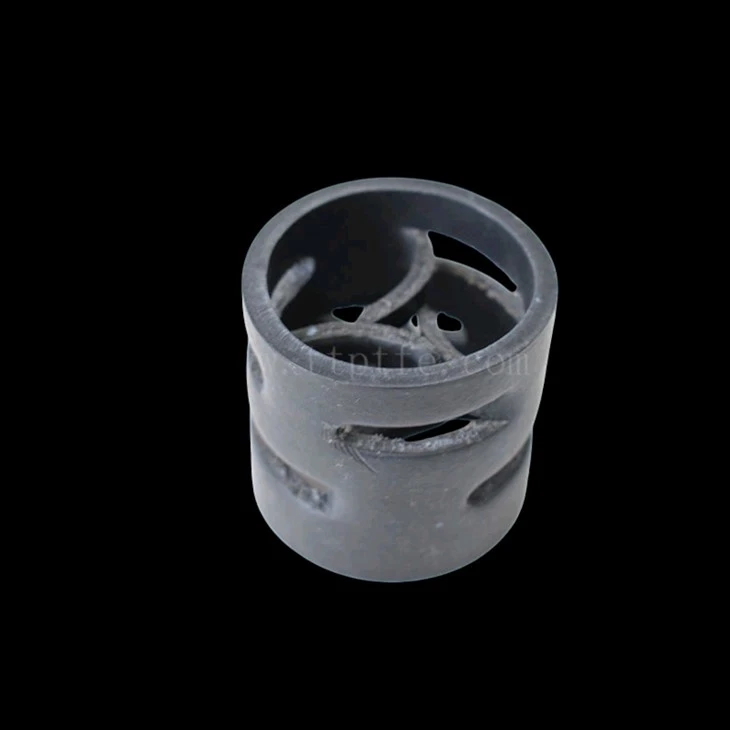

PTFE Graphite Pall Ring
PTFE graphite pall rings are made by impregnating PTFE with graphite, which increases the thermal conductivity of the material. This makes them more efficient at transferring heat compared to pure PTFE pall rings. However, PTFE graphite pall rings are also more expensive and may not be suitable for all applications.
Polypropylene Pall Ring
Polypropylene pall rings are a more cost-effective alternative to PTFE molded pall rings. They have a lower thermal conductivity than PTFE, but they are still suitable for many heat transfer applications. Polypropylene pall rings are also more resistant to certain chemicals than PTFE, which makes them a good choice for applications where chemical resistance is important.
PTFE Pall Ring
PTFE molded pall rings offer a good balance between heat transfer performance, chemical resistance, and cost. They are suitable for a wide range of applications, especially those where high chemical resistance is required. PTFE pall rings are also easy to install and maintain, which makes them a popular choice for many industries.
Real-World Applications
PTFE molded pall rings are used in a variety of industries, including chemical processing, petrochemicals, pharmaceuticals, and food and beverage. Here are some examples of real-world applications where PTFE molded pall rings are used for heat transfer:
Distillation Columns
In distillation columns, PTFE molded pall rings are used to separate different components of a mixture based on their boiling points. The heat transfer performance of the pall rings is crucial for efficient distillation, as it allows for the vaporization and condensation of the components.
Absorption Towers
Absorption towers are used to remove impurities from a gas stream by absorbing them into a liquid. PTFE molded pall rings are used in absorption towers to increase the contact area between the gas and the liquid, which enhances the absorption process.
Heat Exchangers
Heat exchangers are used to transfer heat from one fluid to another. PTFE molded pall rings can be used in heat exchangers to increase the surface area for heat transfer, which improves the efficiency of the heat exchanger.
Conclusion
In conclusion, PTFE molded pall rings offer excellent heat transfer performance, thanks to their unique design and the properties of PTFE. They are suitable for a wide range of applications, especially those where high chemical resistance is required. Whether you're in the chemical processing, petrochemical, pharmaceutical, or food and beverage industry, PTFE molded pall rings can help you achieve efficient heat transfer and improve the performance of your processes.
If you're interested in learning more about PTFE molded pall rings or would like to discuss your specific heat transfer needs, please don't hesitate to get in touch. We're here to help you find the right solution for your application.





