

Hey there! I'm a supplier of graphite rasching rings, and today I wanna have a chat with you about the shape of these super useful things.
Graphite rasching rings are pretty unique in terms of their shape. Picture a small, hollow cylinder. That's the basic shape of a graphite rasching ring. It's like a little tube, with an open center and circular ends. This simple yet effective design has been around for quite some time and has proven to be really versatile in a bunch of different industries.
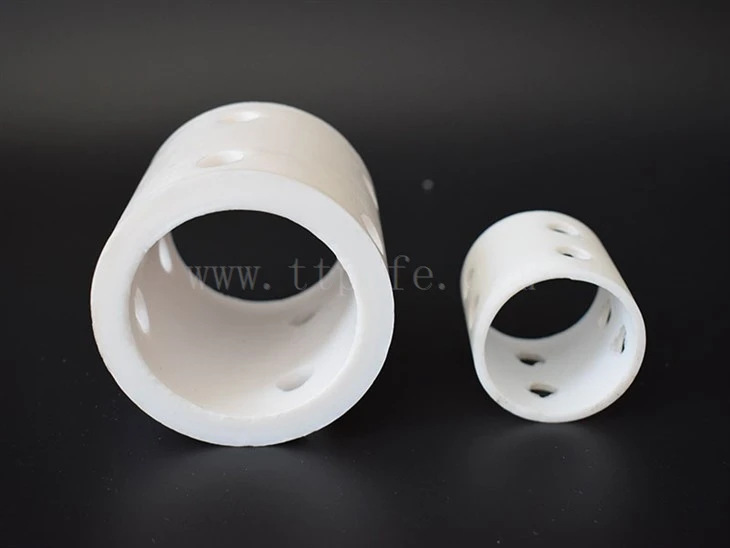
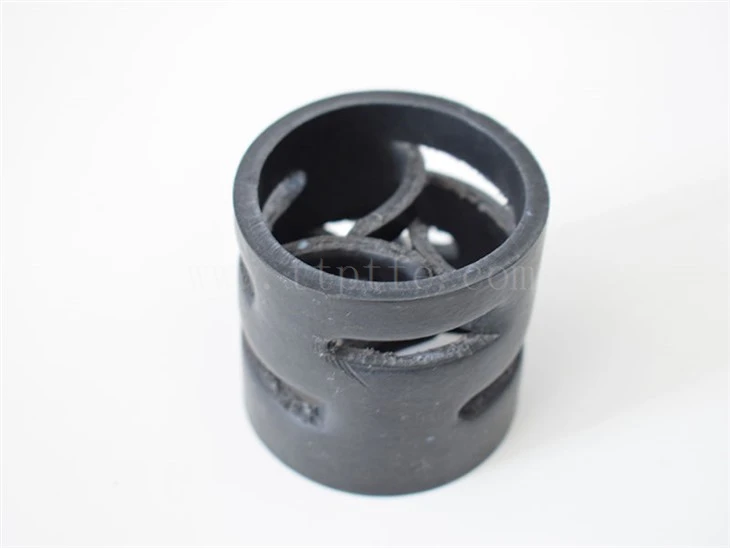
The shape of these rings is crucial because it directly affects how they work. The open - center design allows for a high degree of fluid flow. Whether it's a liquid or a gas, it can easily pass through the ring. This is super important in applications like distillation columns and absorption towers. In a distillation column, for example, the liquid and vapor need to come into contact with each other to separate different components. The graphite rasching rings provide a large surface area for this contact to occur, and the open center lets the fluids move freely, making the separation process more efficient.
The circular cross - section of the ring also plays a big role. It gives the ring a uniform structure, which means it can withstand a fair amount of pressure and mechanical stress. When these rings are packed in a column, they stack up neatly, creating a stable and efficient packing arrangement. This circular shape also helps in distributing the fluid evenly across the packing, ensuring that there are no dead zones where the fluid doesn't flow properly.
Now, the size of the graphite rasching rings can vary. You can find them in different diameters and lengths. Smaller rings are often used when you need a higher surface area per unit volume. They can provide more contact points for the fluids, which is great for applications where you need a high level of mass transfer. On the other hand, larger rings are used when the flow rate of the fluid is high. They offer less resistance to the flow, allowing the fluid to pass through more quickly.
One of the great things about the shape of graphite rasching rings is its simplicity. It's easy to manufacture, which means we can produce them in large quantities at a relatively low cost. And because of their simple shape, they're also easy to install and maintain. You don't need any special tools or complex procedures to pack them into a column or replace them when necessary.
But graphite rasching rings aren't the only type of rasching rings out there. There are also PTFE White Raschig Rings and PTFE Plastic Rasching Ring. These rings are made from different materials, but they share a similar basic shape. The PTFE (polytetrafluoroethylene) rings have their own advantages. PTFE is a very chemical - resistant material, so these rings are great for use in highly corrosive environments where graphite might not be suitable.
However, graphite rasching rings have their own edge. Graphite is an excellent conductor of heat, which makes these rings ideal for applications where heat transfer is important. For example, in some chemical processes, you need to control the temperature of the reaction, and the graphite rasching rings can help in dissipating or absorbing heat effectively.
If you're in an industry that requires efficient mass transfer, heat transfer, or fluid handling, Graphite Rasching Ring could be the perfect solution for you. Whether you're in the chemical, pharmaceutical, or petrochemical industry, these rings can improve the performance of your equipment and processes.
If you're interested in learning more about graphite rasching rings or are thinking about making a purchase, I'd love to have a chat with you. We can discuss your specific needs and figure out the best solution for your application. Just reach out, and we can start the conversation about how these amazing graphite rasching rings can benefit your business.
References
- Perry, R. H., & Green, D. W. (Eds.). (1997). Perry's Chemical Engineers' Handbook. McGraw - Hill.
- Strigle, R. F. (1987). Packed Tower Design and Applications: Random and Structured Packings. Gulf Publishing Company.





