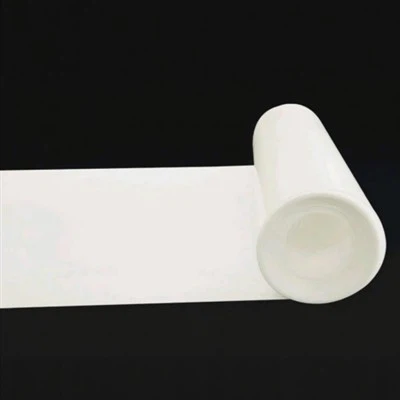
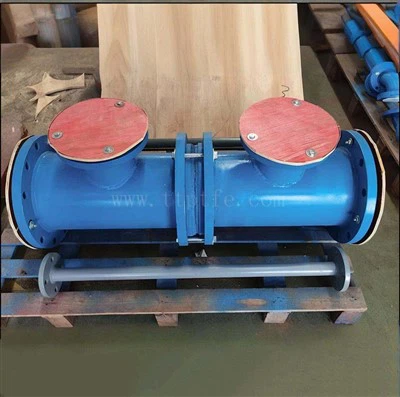
If you've ever worked with industrial piping, you've probably heard someone mention PTFE Teflon tubing-and for good reason. This stuff is basically a workhorse for everything from chemical processing to food and beverage lines, but one question I get asked all the time is: what's its shear strength? It's not a one-size-fits-all answer, and if you're a buyer looking to spec the right tubing for your project, getting this number right can save you from headaches (and costly downtime) down the line.
First off, let's cut through the jargon a little. Shear strength is basically how much force a material can take before it splits along a plane, right? Like if you try to slide two parts of a material past each other, that's shear. For PTFE, this number isn't just pulled out of thin air-it depends on a bunch of factors: how it's made, its temperature, the additives mixed in, and even how it's been processed after manufacturing. Let's break this down so it makes sense, not just like a textbook.
Most virgin PTFE (that's the plain, undoped stuff) has a shear strength that lands roughly between 20 and 30 MPa, which translates to around 2900 to 4350 psi at room temperature. Wait, but that's at room temp-crank up the heat, and that number drops fast. PTFE starts to soften above its glass transition temperature (which is around 19°C or 66°F, fun fact) and gets really flexible above 200°C (392°F). By the time you hit 260°C (500°F), its shear strength is down to like 5 to 10 MPa (725 to 1450 psi) max. That's a big difference, and it's why we always tell customers to check their operating temp first before picking a tubing.
But here's the thing: not all PTFE is the same. A lot of people don't realize that we sell modified PTFE tubing too, and those additives change the shear strength dramatically. For example, we do a lot of black graphite Teflon tubing, which has graphite mixed in to make it more rigid and wear-resistant. Graphite-filled PTFE has a shear strength that's usually 25 to 40 MPa (3625 to 5800 psi) at room temp-so it's stronger than virgin stuff, perfect for applications where you need a little extra stiffness. There's also glass-filled and carbon-filled PTFE, which push that shear strength even higher for heavy-duty industrial uses.
It's not just additives, either. The way the tubing is manufactured plays a huge role. Extruded PTFE tubing (which is the most common type we sell) is made by squeezing molten PTFE through a die, and the process gives it a consistent molecular structure that translates to steady shear strength. Then there's molded PTFE, which is often used for custom parts, but tubing made this way has slightly different mechanical properties. We also have a full line of PTFE Tubing that's been precision-extruded to meet tight tolerances-check out our factory page here if you want to see how we make sure every batch hits the specs.
Wait, but shear strength isn't the only mechanical property you need to think about when picking tubing. Tensile strength (how much it can pull before breaking) is another big one, and PTFE's tensile strength is around 20 to 30 MPa at room temp too, which lines up with its shear strength. But if you're using tubing in a setup with fittings or connectors, that's where shear forces come into play. If you crimp a PTFE tube too hard into a fitting, or if there's vibration that causes the tube to rub against the connector, that shear force can add up and crack the tube. That's why we always recommend matching your connector to your tubing-we have PTFE Tube Connectors designed specifically for our tubing, so you don't have to worry about that mismatch causing issues.
Another common scenario: if you're running tubing through a machine, and it's being bent repeatedly at a sharp angle, that bending creates shear stress along the tube wall. We've had customers come to us with broken tubing after they used a generic brand that had lower shear strength-they didn't account for that repeated bending, and the tube split within a week. That's why when we help a client spec tubing, we ask all sorts of questions: what's the operating temp? How much pressure is the line under? Is there any movement or vibration? What chemicals are flowing through it? All of that ties back to shear strength (and other properties) to make sure the tubing lasts.

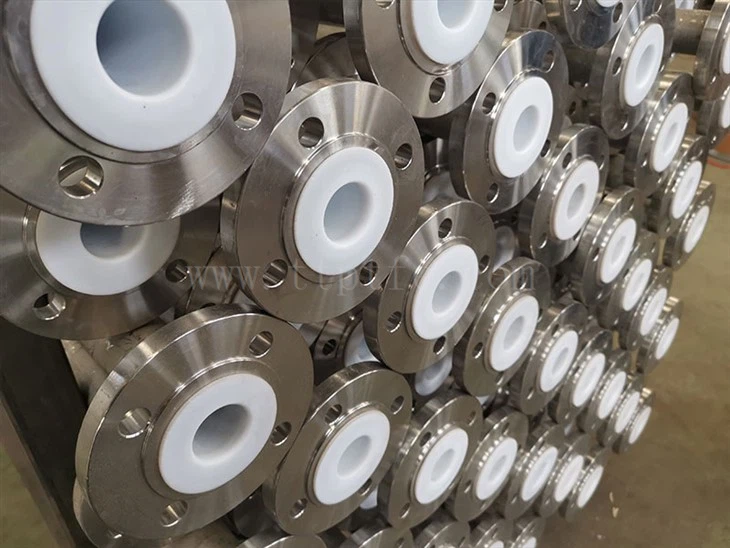
Let's talk about real-world examples to make this concrete. If you're running a line for a brewery, transporting hot wort (which is around 150°F, so well below PTFE's max temp) and there's no constant bending or high pressure, virgin PTFE tubing works great. Its shear strength at that temp is still around 25 MPa, which is more than enough for that application. But if you're working in a chemical plant, moving corrosive acids at 350°F, you'll want a filled PTFE-like our black graphite Teflon tubing, which has higher shear strength and better high-temperature stability, so it won't break under the stress. And if you're making custom sleeving for wiring or hose protection, our Teflon Sleeving Tubing is designed to handle shear from abrasion and bending, with a shear strength that holds up in tight spaces.
One thing I wish more people knew: shear strength data is often tested on small, standardized samples, not the actual tubing size you're using. So a 1mm wall tubing will have a different effective shear strength than a 5mm wall tubing, even if they're both the same material. Thicker walls can handle higher shear forces, because there's more material to distribute the stress. That's another reason why working with a supplier who knows their stuff matters-we can adjust wall thickness and material type to match your specific shear needs, instead of you guessing and buying the wrong size.
I've been in this business for 8 years, and I've seen it all: customers who spec too-thin tubing because they think all PTFE is the same, and it fails within a month; customers who pick the wrong filler and have issues with chemical compatibility; customers who skip matching their connectors and have leaks. The shear strength of PTFE Teflon tubing isn't a random number-it's a critical spec that has to align with your whole application. It's not enough to just check the box for "PTFE"-you have to look at the shear strength, how it changes with temp, what additives are in the material, and your operating conditions.
If you're not sure what shear strength you need, or you want to compare our different PTFE products, we're here to help. We've got a full range of PTFE Tubing options, from virgin to filled, in all sizes, and our team can walk you through which one will work best for your project. Whether you need black graphite Teflon tubing for high-heat chemical lines, Teflon sleeving for wiring, or specific PTFE tube connectors for your setup, we've got you covered. Don't waste time or money on tubing that won't stand up to the shear forces in your application-reach out to our team to chat through your needs, and we'll make sure you get the right product for the job.