Hey there! As a supplier of teflon PTFE sheets, I often get asked about the standard size of these sheets. So, I thought I'd take the time to break it down for you all.
First off, let's talk a bit about what PTFE is. PTFE, or polytetrafluoroethylene, is a synthetic fluoropolymer of tetrafluoroethylene. It's known for its amazing non - stick properties, high chemical resistance, and low friction coefficient. Teflon is actually DuPont's brand name for PTFE, and over time, the name has become a common way to refer to this material.
When it comes to the standard sizes of teflon PTFE sheets, there isn't a one - size - fits - all answer. That's because different industries and applications have different requirements.
Common Thicknesses
Let's start with thickness. PTFE sheets can come in a wide range of thicknesses. For very thin applications, you might see sheets as thin as 0.05 mm. These ultra - thin sheets are often used in electronics, like for insulating small components or as a protective layer on circuit boards.
On the other hand, for more heavy - duty applications, you can find sheets that are 25 mm thick or even more. Thick PTFE sheets are used in industrial settings, such as in chemical processing plants where they need to withstand high pressures and corrosive substances.
Some of the more common thicknesses that we deal with as a supplier are 0.1 mm, 0.2 mm, 0.5 mm, 1 mm, 2 mm, 5 mm, and 10 mm. These sizes are popular because they can be used in a variety of applications, from gaskets and seals to lining pipes and containers.
Standard Widths and Lengths
In terms of width and length, things get a bit more variable too. A lot of standard PTFE sheets are available in widths ranging from 100 mm to 2000 mm. The most common widths are around 600 mm, 1000 mm, and 1500 mm. These widths are convenient because they can be easily cut down to fit different project requirements.
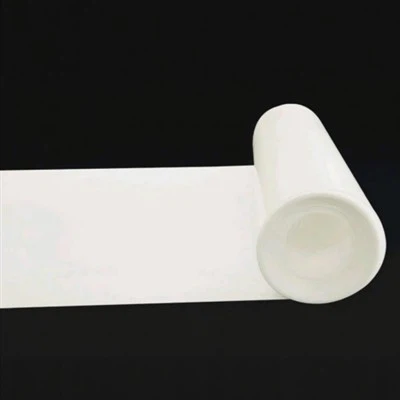
When it comes to length, PTFE sheets can be supplied in rolls or as individual sheets. For rolls, the length can be several meters, sometimes up to 100 meters or more, depending on the thickness and the manufacturer's capabilities. If you're looking for individual sheets, lengths can range from 1 meter to 5 meters.
Custom Sizes
Here's the great thing about being a PTFE sheet supplier: we can often provide custom - sized sheets. If you have a specific project that requires a non - standard size, don't worry! We can cut the sheets to your exact specifications. Whether you need a really long and narrow sheet for a special machinery part or a large square sheet for a big industrial tank lining, we've got you covered.
Applications and Size Requirements
Now, let's talk about how different applications affect the size requirements of PTFE sheets.
1. Gaskets and Seals
For gaskets and seals, you typically need thinner sheets. A thickness of 1 - 3 mm is quite common. The width and length depend on the shape and size of the area where the gasket or seal will be used. For example, if it's for a small pump, the sheet might only need to be a few centimeters in width and length. But for a large industrial valve, it could be much bigger. You can check out our PTFE Teflon Sheet for Slide Plate which can also be used in some gasket - like applications.
2. Lining for Pipes and Containers
When lining pipes and containers, you need sheets that can cover the entire surface area. The thickness will depend on the type of chemicals or substances that will be in contact with the lining. Thicker sheets, around 3 - 10 mm, are often used for this purpose. The width and length will be determined by the dimensions of the pipe or container. Our Plastic PTFE Plate can be a great option for lining applications.


3. Electrical Insulation
In the electronics industry, thin PTFE sheets are used for electrical insulation. Thicknesses of 0.1 - 0.5 mm are common. The size of the sheets will depend on the size of the electronic components. Smaller components might only need a few square centimeters of PTFE sheet, while larger assemblies could require larger pieces.
4. Chemical Processing
Chemical processing plants use PTFE sheets in a variety of ways. For example, they might use thick sheets to line reaction vessels. Thicknesses of 5 - 25 mm are not uncommon. The width and length will be based on the size of the vessel. Our PTFE Sodium Sheet can be suitable for some chemical - processing applications due to its specific properties.
Factors Affecting Size Selection
There are a few factors that you should consider when selecting the size of a PTFE sheet for your project.
- Application Requirements: As we've already discussed, different applications have different size needs. Make sure you understand the specific requirements of your project before choosing a size.
- Manufacturing Constraints: Sometimes, there might be limitations in terms of what the manufacturer can produce. For example, very large sheets might be difficult to manufacture due to equipment size and capacity.
- Cost: Larger sheets or custom - sized sheets can be more expensive. You need to balance your size requirements with your budget.
Why Choose Our PTFE Sheets
As a supplier, we take pride in offering high - quality PTFE sheets. Our sheets are made from top - grade raw materials, ensuring excellent performance and durability. We have a wide range of standard sizes in stock, and we're also very flexible when it comes to custom - cutting sheets to your needs.
Whether you're a small business working on a niche project or a large industrial company with big - scale requirements, we can provide the right PTFE sheets for you. We offer competitive prices and fast delivery times, so you can get your project up and running as soon as possible.
Let's Talk!
If you're in the market for teflon PTFE sheets, don't hesitate to reach out. We're here to help you find the perfect size and type of sheet for your application. Whether you have questions about sizing, properties, or pricing, our team of experts is ready to assist you. Just drop us a line, and we'll start the conversation.
References
- "Handbook of Fluoropolymer Science and Technology"
- "Plastic Materials" by J. A. Brydson