If you've ever worked in industrial piping-whether in chemical processing, oil and gas, or water treatment-you've probably fielded the same question from clients: Can a DN800 tee work for both liquid and gas applications? As a supplier who's supported hundreds of projects with large-diameter tees over the last decade, I hear this all the time, and the short answer is yes-but only if you pick the right DN800 tee, account for its design specs, and align it with your process conditions. I'm not here to sell you something you don't need, but after walking clients through high-stakes installations for PTFE lined chemical storage tanks and refinery piping, I've learned there are key nuances to unpack before you make a call. Let's break this down with real-world context, not just textbook jargon.
First, let's ground ourselves in what a DN800 tee actually is. DN stands for "Nominal Diameter," a metric used globally to size pipes and fittings, and DN800 translates to a large, 31.5-inch diameter tee. That's bigger than most residential water mains, so these tees handle massive volumes of flow-think multi-million-gallon chemical processing lines or industrial gas distribution networks. When a client comes to me asking if this big tee can shift between liquid and gas, their underlying concern is always consistent: will the fitting hold up to pressure, corrosion, and flow dynamics without leaking or failing?
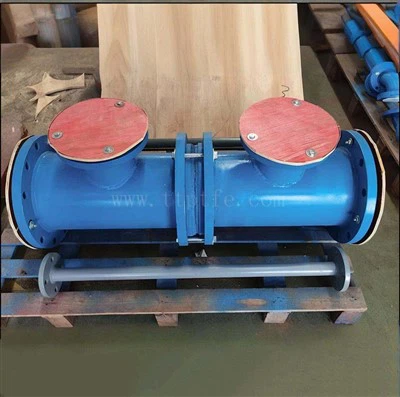
Let's start with the core design of a DN800 tee that makes it versatile. Most standard tees have three openings: one inlet, two outlets (or vice versa), and they're engineered to distribute flow evenly across the run and branch. What I've found over the years is that the versatility really comes down to the material of the tee, not just its size. For example, PTFE lined tees are the workhorses for dual liquid and gas use because PTFE (polytetrafluoroethylene) is inert to almost 99% of chemicals, resists extreme temperatures, and has a very low coefficient of friction. That means it won't corrode when transferring corrosive liquids like sulfuric acid or caustic soda, and it won't break down when moving high-pressure gases like nitrogen or natural gas. I always point clients to our PTFE lined tees when they mention dual-use applications because we line the interior of both the run and branch of the DN800 tee uniformly, so there's no transition point where material mismatch could cause issues. If you're curious to see the specs, you can check out our DN800 tee page directly for exact dimensions and pressure ratings.
But before you jump to spec'ing a DN800 tee for both phases, you need to consider two critical factors: process pressure and flow dynamics. Let's talk pressure first. Gases are compressible, so a gas line at 100 PSI has a different load on a fitting than a liquid line at 100 PSI. Liquids are essentially incompressible, so they exert consistent, static pressure along the pipe wall, while gases can spike or fluctuate more, especially if there's a change in flow rate. The good news is that a well-manufactured DN800 tee is rated for a range of pressures, but you need to make sure the tee you're using is pressure-rated for the highest pressure your process will hit, whether that's liquid or gas. I once had a client in the petrochemical industry who tried to use a generic carbon steel DN800 tee for a line that switched between jet fuel (liquid) and methane (gas). The tee corroded quickly because carbon steel isn't lined, and the pressure fluctuations from the gas phase caused a small crack at the branch connection. They had to shut down their entire unit to replace the tee, which cost them millions in downtime. That's why lining matters-PTFE acts as a barrier between the steel and the process fluid, whether it's liquid or gas.
Next, flow dynamics. When a tee handles both liquid and gas, the velocity of each phase changes how the fluid moves through the fitting. Liquids flow in a continuous stream, while gases are faster and have a tendency to carry liquid droplets or, in some cases, separate from the liquid phase entirely. For a DN800 tee, which is so large, flow distribution can be tricky if the fitting isn't designed right. If you're splitting flow through the branch, you don't want liquid to pool in the branch (which would happen if the tee's interior isn't shaped to guide flow) or for gas to create turbulence that wears on the lining. That's why we design our DN800 tees with smooth, gradual transitions at the run and branch junctions, same as we do for our PTFE lined elbows 90 to minimize turbulence. We also apply the PTFE lining in a seamless process, so there are no weak points where the lining could peel away from the steel wall under high-velocity gas flow. I always tell clients to test the flow regime (single-phase liquid, single-phase gas, or two-phase) of their process before selecting a tee-if you're switching between all three, a lined DN800 tee is still viable, but you might need to adjust the branch size slightly to prevent turbulence.
Wait, but what about applications where the liquid or gas is highly corrosive? That's where the material choice becomes non-negotiable. If you're transferring anything from hydrochloric acid to hydrofluoric acid, or even acidic water, a standard steel tee won't last six months. That's where PTFE lined fittings come in. The link I added for PTFE lined chemical storage tank is a good example of how this technology works at scale-we line both storage tanks and piping systems with the same PTFE lining, so there's consistency across your entire process. The lining we use is made from virgin PTFE, not recycled material, which is more durable and resistant to abrasion and chemical attack. If you're unsure about lining thickness, our team can help you calculate the right amount-we typically recommend a 2mm to 3mm lining for DN800 tees, which is thick enough to handle both liquid and gas flow for decades. I had a client in the pharmaceutical industry last year who was using a DN800 tee for both ethanol (liquid) and nitrogen (gas) to transfer API intermediates. They were worried about cross-contamination, but our PTFE lining is non-porous, so there's no chance of process fluid seeping into the steel wall. That's a huge plus for regulated industries where purity is non-negotiable.
But let's be clear: a DN800 tee isn't the right choice for every dual liquid-gas application. There are limits. For example, if your process has very high temperatures (above 260°C, which is the maximum continuous operating temperature for most PTFE linings), you might need to use a different material, like high-density polyethylene (HDPE), but HDPE isn't suitable for highly corrosive chemicals. If your pressure is over 150 PSI, you'll need to confirm the tee's rating-some standard DN800 tees are rated for lower pressures, so you can't cut corners here. I always recommend working with a supplier who can provide test certificates for their fittings, so you know the tee meets industry standards like ASME B16.9 or ISO 14692 for large-diameter piping.
Another common question I get: Can you use the same DN800 tee for multiple liquid and gas lines? For example, using one tee for a water line and a compressed air line. In that case, if the fluids are non-corrosive, a standard unlined steel tee might work temporarily, but I still recommend a lined tee for long-term use, even for water and air, because it reduces friction loss, which means lower energy costs for your pumps or compressors. Friction loss in a DN800 tee is a big deal-because it's so large, even a small amount of turbulence can add up to significant energy waste over time. The smooth PTFE lining cuts friction by up to 70% compared to unlined steel, so not only is it durable, but it's also more energy-efficient.
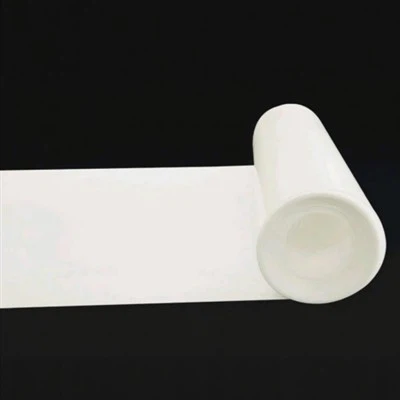
I also want to touch on installation, because that's where a lot of dual-use applications go wrong. If you install a DN800 tee incorrectly-like not aligning the run straight, or using the wrong gaskets-you'll get leaks, regardless of how good the tee is. For applications switching between liquid and gas, you need to use gaskets that are compatible with both phases. We recommend PTFE virgin sheet for gaskets, because it's inert and can handle wide temperature and pressure ranges. That's another link I included-if you need gaskets, you can check out our PTFE virgin sheet page for custom-cut sizes to fit your DN800 tee. I always tell clients to hire installers who have experience with large-diameter lined piping, because the last thing you want is a leak in a DN800 line that's transferring corrosive liquid or high-pressure gas. A shut-down for a DN800 line isn't like fixing a small pipe under your sink- it can take days to drain, inspect, and repair, costing thousands of dollars per hour in lost production.
Let's get back to the original question: Can a DN800 tee be used for both liquid and gas? From my experience as a supplier who's worked on these projects for 10 years, the answer is a resounding yes-if you spec the right tee. The key factors are: lined material (PTFE is best for most chemical and industrial applications), pressure and flow ratings matched to your process, smooth flow geometry to prevent turbulence, and proper installation. I've seen DN800 tees work flawlessly for dual liquid and gas applications in fertilizer plants, refineries, pharmaceutical facilities, and water treatment plants. I've also seen them fail when the wrong tee was selected-generic unlined steel, insufficient lining thickness, or incorrect installation.
If you're currently designing a process that involves switching between liquid and gas, or if you're dealing with an old DN800 tee that's failing, I'd be happy to walk you through your options. We've helped hundreds of clients select the right DN800 tee, whether it's for a temporary dual-use application or a permanent industrial system. You don't have to guess about specs, pressure ratings, or lining thickness-our team can provide test data, case studies, and custom solutions tailored to your exact needs.
Now, a quick note on what you should look for in a supplier for your DN800 tee. You want a supplier who has experience with large-diameter lined fittings, offers custom sizing if needed, and provides clear documentation for all products. For example, our DN800 tee page has exact pressure ratings, lining specs, and material certifications, so you can be sure the product meets your industry's standards. We also offer fast lead times for large orders, because we know that downtime is costly for industrial operators.
Before I wrap up, let's address one more concern: phase separation. When you have a line that switches between liquid and gas, sometimes the two phases mix, creating a two-phase flow. A DN800 tee with a smooth, gradual branch transition handles this much better than a tee with a sharp, right-angle branch. The sharp angle causes the liquid to slam into the branch, creating turbulence that wears on the lining and can lead to erosion over time. We design our DN800 tees with a 15-degree taper at the run-to-branch junction, which guides both liquid and gas evenly without slamming, extending the life of the fitting significantly. This is a small design choice that makes a huge difference in dual-use applications, and it's something that many generic tee manufacturers skip.
At the end of the day, the DN800 tee is a versatile fitting, but its success in liquid and gas applications comes down to matching the product to your specific process. You don't have to overspec (which would be costly) or underspec (which would lead to failure). A properly lined DN800 tee with the right pressure and flow ratings is more than capable of handling both phases, as long as you account for the unique dynamics of liquid and gas flow.


If you're ready to discuss your DN800 tee needs, or if you have questions about our lined tees, storage tanks, elbows, or gaskets, our team is here to help. We can review your process specs, provide custom quotes, and make sure you get the right product for your application. Don't hesitate to reach out to start a conversation about your project.