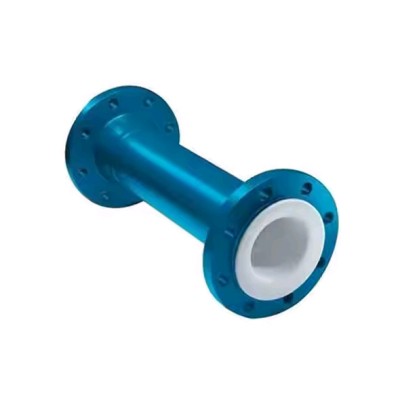
Can PTFE lined pipes be used in cryogenic applications? That's a question I get asked a lot as a supplier of PTFE Lined Pipe. And it's a fair one, considering the extreme conditions that come with cryogenic environments. So, let's dive in and explore whether PTFE lined pipes are up for the challenge.
First off, let's talk a bit about PTFE. PTFE, or polytetrafluoroethylene, is a synthetic fluoropolymer that's known for its excellent chemical resistance, low friction, and high temperature tolerance. It's widely used in a variety of industries, from chemical processing to food and beverage. But when it comes to cryogenic applications, things get a little more complicated.
Cryogenic applications involve extremely low temperatures, typically below -150°C (-238°F). These conditions can have a significant impact on the performance of materials, causing them to become brittle, crack, or lose their structural integrity. So, the big question is, how does PTFE hold up in these frigid environments?
The Advantages of PTFE in Cryogenic Applications
One of the main advantages of PTFE is its low coefficient of friction. This means that fluids can flow through PTFE lined pipes with minimal resistance, reducing the energy required to move them. In cryogenic applications, where maintaining fluid flow is crucial, this can be a huge benefit.


Another advantage is PTFE's chemical resistance. Cryogenic fluids are often highly reactive and can corrode or damage other materials. PTFE, however, is resistant to a wide range of chemicals, making it a great choice for handling these corrosive substances.
PTFE also has excellent electrical insulation properties. In cryogenic applications where electrical systems are present, this can help prevent electrical leakage and ensure the safe operation of equipment.
The Challenges of PTFE in Cryogenic Applications
While PTFE has many advantages, it also faces some challenges in cryogenic applications. One of the main issues is its mechanical properties at low temperatures. PTFE becomes more brittle as the temperature drops, which can increase the risk of cracking and failure.
Another challenge is thermal contraction. Like all materials, PTFE contracts when cooled. In cryogenic applications, the difference in thermal expansion between the PTFE lining and the outer pipe can cause stress and potentially lead to delamination or cracking.
Mitigating the Challenges
To overcome these challenges, several strategies can be employed. One approach is to use modified PTFE materials, such as Bronze Filled PTFE. Filling PTFE with bronze particles can improve its mechanical properties at low temperatures, making it more resistant to cracking and wear.
Proper design and installation are also crucial. Ensuring that the PTFE lined pipe is installed correctly and that there is sufficient allowance for thermal contraction can help prevent stress buildup and reduce the risk of failure.
Regular inspection and maintenance are also important. Monitoring the condition of the PTFE lining and the outer pipe can help detect any issues early on and allow for timely repairs or replacements.
Real - World Examples
In many real - world cryogenic applications, PTFE lined pipes have been used successfully. For example, in the liquefied natural gas (LNG) industry, PTFE lined pipes are used to transport cryogenic fluids from storage tanks to processing facilities. These pipes have proven to be reliable in handling the extreme cold and corrosive nature of LNG.
In the medical field, PTFE lined pipes are used in cryogenic cooling systems for MRI machines. The low friction and chemical resistance of PTFE make it ideal for transporting the cryogenic fluids used to cool the superconducting magnets.
Other PTFE Products for Cryogenic Use
In addition to PTFE Lined Pipe, we also offer other PTFE products that can be used in cryogenic applications. PTFE Pneumatic Tubing is often used in cryogenic pneumatic systems, where it provides a reliable and flexible solution for transporting gases at low temperatures.
Rigid PTFE Tubing can be used in applications where a more rigid structure is required. Its high strength and chemical resistance make it suitable for use in cryogenic piping systems.
And of course, our PTFE Tubing is a versatile option that can be used in a variety of cryogenic applications, from laboratory setups to industrial processes.
Making the Right Choice
When considering using PTFE lined pipes or other PTFE products in cryogenic applications, it's important to work with a knowledgeable supplier. We have years of experience in providing PTFE solutions for a wide range of industries, including cryogenics. We can help you choose the right product for your specific application, taking into account factors such as temperature, pressure, and chemical compatibility.
If you're in the market for PTFE products for cryogenic applications, don't hesitate to reach out. Our team is ready to answer your questions, provide technical support, and work with you to find the best solution for your needs. Whether you're a small - scale laboratory or a large industrial facility, we have the products and expertise to help you succeed.
Conclusion
So, can PTFE lined pipes be used in cryogenic applications? The answer is yes, but with some considerations. While PTFE has many advantages in terms of chemical resistance, low friction, and electrical insulation, it also faces challenges related to its mechanical properties at low temperatures and thermal contraction. However, by using modified PTFE materials, proper design and installation, and regular maintenance, these challenges can be mitigated.
If you're looking for PTFE lined pipes or other PTFE products for your cryogenic application, we're here to help. Contact us to start a conversation about your requirements and let us show you how our products can meet your needs.