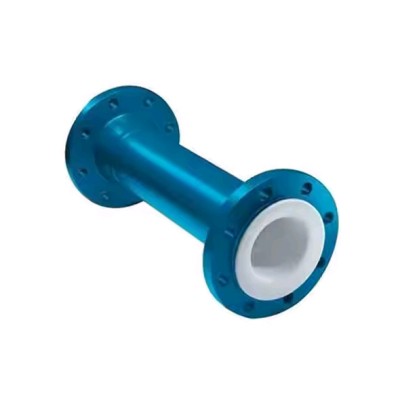
Hey there! I'm a supplier of fluoroplastic pipes, and today I wanna chat about something super important: the compression strength of fluoroplastic pipes.
So, what exactly is compression strength? In simple terms, it's the ability of a material to withstand a crushing force without breaking or deforming permanently. For fluoroplastic pipes, this is a crucial factor, especially when they're used in various industrial applications where they might face high pressures.
Fluoroplastic pipes are known for their excellent chemical resistance, low friction coefficient, and high-temperature resistance. But their compression strength also plays a big role in determining their performance. Different types of fluoroplastic pipes have different compression strengths.
Let's start with the Virgin Teflon Pipe. Virgin Teflon is a high - grade form of polytetrafluoroethylene (PTFE). It has a relatively good compression strength. The molecular structure of PTFE gives it a certain degree of rigidity, which helps it resist compression. In industrial settings where there are moderate pressure requirements, Virgin Teflon Pipe can be a great choice. For instance, in some chemical processing plants where the pipes need to carry fluids under a certain pressure without getting damaged, these pipes work like a charm.
Then there's the Teflon PTFE Pipe. Similar to the Virgin Teflon Pipe, but it might be processed in a different way or have some additives in some cases. The compression strength of Teflon PTFE Pipe can be adjusted according to the specific manufacturing process. If you need a pipe that can handle a bit more pressure, you can look into the ones with enhanced compression properties. They're often used in applications where the pressure is a bit on the higher side, like in some hydraulic systems.
Now, let's talk about PTFE Heat Shrink Tubing. This type of tubing is mainly used for insulation and protection. While it might not be directly associated with high - pressure applications like some pipes, it still needs to have a certain level of compression strength. When it shrinks around a component, it should be able to maintain its shape and integrity without being easily crushed. For example, in electrical applications where it's used to insulate wires, it needs to resist any external forces that might try to compress it and damage the insulation.
PTFE Convoluted Tubing has a unique design with its convoluted shape. This design gives it some flexibility, but it also affects its compression strength. The ridges and valleys in the tubing can distribute the compression force in a different way compared to a straight pipe. In applications where there's a need for both flexibility and a certain amount of compression resistance, like in some robotic or automation systems where the pipes need to move around, PTFE Convoluted Tubing can be a great option.
And last but not least, the Anti Corrosion PTFE Teflon Tube. As the name suggests, its main feature is anti - corrosion. But compression strength is also important here. In corrosive environments where the tubes are exposed to harsh chemicals and might also face some pressure, they need to be able to withstand both the chemical attack and the compression force. For example, in the offshore oil and gas industry, these tubes are used to transport corrosive fluids under pressure.
Several factors can affect the compression strength of fluoroplastic pipes. The material quality is a big one. Higher - quality raw materials usually result in pipes with better compression strength. The manufacturing process also matters. If the pipes are properly extruded, molded, or treated, they'll have more consistent and higher compression strength. The wall thickness of the pipe is another crucial factor. Generally, thicker - walled pipes can withstand more compression force than thinner - walled ones.


To measure the compression strength of fluoroplastic pipes, there are standard testing methods. One common method is to use a compression testing machine. The pipe is placed between two plates, and a gradually increasing force is applied until the pipe shows signs of failure, like cracking or excessive deformation. The maximum force the pipe can withstand before failure is recorded as its compression strength.
If you're in the market for fluoroplastic pipes, understanding the compression strength is essential. It'll help you choose the right type of pipe for your specific application. Whether it's a low - pressure or high - pressure situation, there's a fluoroplastic pipe that can meet your needs.
If you have any questions about the compression strength of our fluoroplastic pipes or want to discuss your specific requirements, don't hesitate to reach out. We're always here to help you find the perfect solution for your project. Whether you need a small quantity for a prototype or a large - scale supply for an industrial project, we've got you covered. Let's have a chat and see how we can work together to get you the best - suited fluoroplastic pipes.