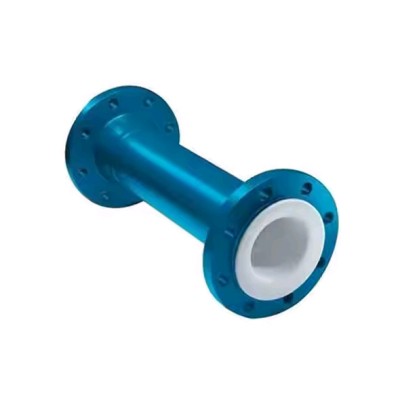
Hey there! As a supplier of PTFE lined pipes, I often get asked about the hardness of these pipes. So, I thought I'd take a few minutes to break it down for you.
First off, let's talk about what PTFE is. PTFE stands for polytetrafluoroethylene. It's a synthetic fluoropolymer that's known for its amazing chemical resistance, low friction coefficient, and high melting point. These properties make it a top - choice material for lining pipes in a whole bunch of industries, like chemical processing, food and beverage, and pharmaceuticals.
Now, when it comes to the hardness of a PTFE lined pipe, it's a bit different from what you might think of with regular materials. PTFE itself is a relatively soft material. On the Shore D hardness scale, which is commonly used to measure the hardness of plastics, PTFE typically has a hardness in the range of 50 - 65. To put that in perspective, a harder plastic like polycarbonate can have a Shore D hardness of around 85 - 90.
The softness of PTFE has both its pros and cons. On the plus side, this softness allows PTFE to conform well to the inner surface of the pipe. When we line a pipe with PTFE, it can create a smooth, seamless lining that hugs the contours of the pipe. This is great for preventing any gaps or crevices where chemicals or fluids could get trapped. It also helps in reducing the risk of corrosion and erosion on the inner walls of the pipe.
Another advantage of the softness is its excellent sealing properties. PTFE can easily form a tight seal against gaskets and other components in a piping system. This is crucial for preventing leaks, especially when dealing with high - pressure or corrosive fluids.
However, the softness of PTFE also means that it's more prone to scratches and abrasions compared to harder materials. In applications where there's a lot of solid particle flow or where the fluid has a high velocity, the PTFE lining could potentially get damaged over time. But don't worry, there are ways to mitigate this.
One solution is to use a thicker PTFE lining. A thicker lining can provide more protection against wear and tear. We also offer different types of PTFE lined pipes that are reinforced or have special additives to increase their hardness and durability.
For example, our Stainless Steel Teflon Hose combines the flexibility and chemical resistance of PTFE with the strength of stainless steel. The stainless - steel outer layer provides extra protection against physical damage, while the PTFE lining keeps the fluid inside safe from corrosion.
Another option is our Black Graphite Teflon Tubing. The graphite additive in this tubing not only increases its hardness but also improves its thermal conductivity. This makes it suitable for applications where heat transfer is important, like in some chemical reactors.
If you need a more lightweight and flexible option, our Thin Wall PTFE Tubing might be the way to go. Despite its thin wall, it still offers good chemical resistance and can be used in applications where space is limited.
When choosing a PTFE lined pipe, it's important to consider the specific requirements of your application. Factors like the type of fluid, the pressure, the temperature, and the presence of solid particles all play a role in determining the right hardness and thickness of the PTFE lining.


We've got a team of experts who can help you make the best choice. Whether you're a small - scale operation or a large industrial plant, we can provide you with the right PTFE lined pipes to meet your needs.
If you're interested in learning more about our PTFE lined pipes or have any questions about the hardness or other properties, don't hesitate to reach out. We're here to assist you in finding the perfect solution for your piping needs. Let's start a conversation and see how we can work together to get you the best PTFE lined pipes for your project.
References
- "Handbook of Plastics, Elastomers, and Composites" by Charles A. Harper
- "Polymer Science and Technology" by Donald R. Paul and Charles B. Bucknall