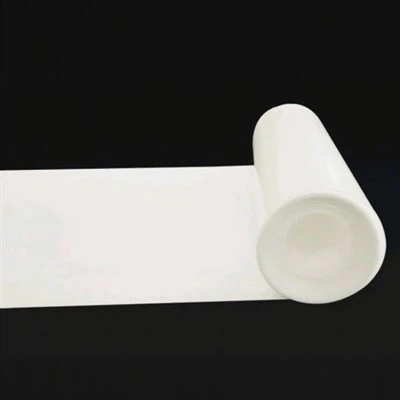
Hey there! As a supplier of filled PTFE sheets, I often get asked about the heat resistance stability of these amazing materials. So, let's dive right in and explore what makes filled PTFE sheets so special when it comes to handling high temperatures.
First off, let's talk a bit about what PTFE is. PTFE, or polytetrafluoroethylene, is a synthetic fluoropolymer. It's well - known for its non - stick properties, low friction coefficient, and excellent chemical resistance. But when we talk about filled PTFE sheets, we're taking these base properties and enhancing them even further. Filling PTFE with various materials like glass fiber, carbon fiber, bronze, or graphite can improve its mechanical, wear, and heat - resistant properties.
Now, heat resistance stability is a crucial factor, especially in industries where high temperatures are a common occurrence. For example, in the aerospace, automotive, and chemical processing industries, filled PTFE sheets need to maintain their integrity under extreme heat.
The heat resistance stability of filled PTFE sheets is mainly determined by two things: the type of filler used and the percentage of the filler. Different fillers have different heat - resistant capabilities. For instance, glass fiber - filled PTFE can withstand relatively high temperatures. Glass fiber has a high melting point and can help the PTFE matrix maintain its shape and mechanical properties at elevated temperatures. When the temperature rises, the glass fiber acts as a reinforcement, preventing the PTFE from deforming too much.
Carbon fiber - filled PTFE is another great option. Carbon fiber has excellent thermal conductivity, which means it can dissipate heat quickly. This helps in reducing the internal temperature of the filled PTFE sheet, thus enhancing its heat - resistance stability. The carbon fiber also provides good mechanical strength, so the sheet can maintain its structural integrity even when exposed to high - temperature environments.
Bronze - filled PTFE is often used in applications where high - load and high - temperature conditions are present. Bronze has good heat - transfer properties and can also improve the wear resistance of the PTFE. When the filled PTFE sheet is heated, the bronze particles help in distributing the heat evenly across the material, preventing hot spots that could lead to premature failure.
Graphite - filled PTFE is known for its self - lubricating properties. In high - temperature applications, the graphite can reduce friction and wear. It also has good thermal stability. As the temperature increases, the graphite helps in maintaining the lubricating film on the surface of the PTFE sheet, which in turn reduces the heat generated due to friction.
The percentage of the filler also plays a significant role. Generally, a higher percentage of filler can improve the heat - resistance stability up to a certain point. However, if the filler percentage is too high, it can lead to a decrease in the flexibility and processability of the filled PTFE sheet. So, finding the right balance is crucial.
When it comes to the actual temperature range that filled PTFE sheets can handle, it varies depending on the filler. On average, filled PTFE sheets can withstand temperatures from - 200°C to 260°C. Some specialized filled PTFE sheets can even handle higher temperatures for short periods.
In real - world applications, the heat - resistance stability of filled PTFE sheets is put to the test. For example, in automotive engines, filled PTFE gaskets are used to seal different components. These gaskets need to withstand the high temperatures generated by the engine's combustion process. If the heat - resistance stability of the filled PTFE is not good, the gaskets can fail, leading to leaks and potential engine damage.


In the chemical processing industry, filled PTFE sheets are used as linings for pipes and vessels. These linings need to resist the high temperatures and corrosive chemicals. The heat - resistance stability ensures that the lining remains intact and provides long - term protection.
Now, if you're in the market for high - quality filled PTFE sheets, we've got you covered. We offer a wide range of filled PTFE sheets with different fillers and filler percentages to meet your specific needs. You can check out our Thickness PTFE Plate Teflon Plate, PTFE Teflon Plate Sheet, and Tetrafluoro Sodium Plate for more details.
If you have any questions about the heat - resistance stability of our filled PTFE sheets or want to discuss your specific requirements, feel free to reach out to us. We're here to help you make the right choice for your application. Whether you're in the aerospace, automotive, or chemical processing industry, we can provide you with the best - in - class filled PTFE sheets.
In conclusion, the heat - resistance stability of filled PTFE sheets is a complex but important aspect. It depends on the type and percentage of the filler, and it has a significant impact on the performance of the sheets in high - temperature applications. So, if you're looking for reliable filled PTFE sheets, don't hesitate to contact us. We're ready to assist you in finding the perfect solution for your needs.