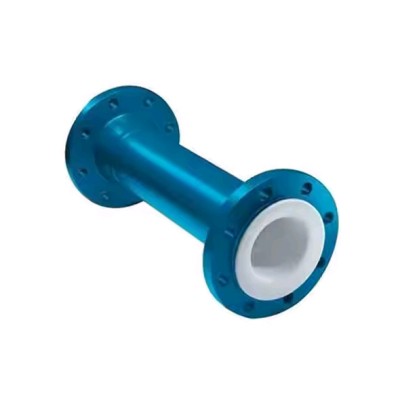
Hey there! As a supplier of PTFE Teflon tubing, I often get asked about the heat transfer coefficient of this amazing material. So, I thought I'd take a deep dive into it and share everything you need to know.
First off, let's understand what PTFE Teflon tubing is. PTFE, or polytetrafluoroethylene, is a synthetic fluoropolymer of tetrafluoroethylene. It's well - known for its non - stick properties, high chemical resistance, and a wide range of temperature tolerance. Our company offers different types of PTFE Teflon tubing, like Teflon Sleeving Tubing, Rigid PTFE Tubing, and we also have PTFE Tube Connector to make your piping systems more complete.
Now, onto the heat transfer coefficient. The heat transfer coefficient is a measure of how well a material can transfer heat. It's usually denoted by the symbol 'h' and has units of W/(m²·K). In simpler terms, it tells us how much heat can flow through a unit area of the material per unit temperature difference.
For PTFE Teflon tubing, the heat transfer coefficient is relatively low compared to some metals. Metals like copper and aluminum are great conductors of heat, with high heat transfer coefficients. PTFE, on the other hand, is an insulator. This is actually one of its key advantages in many applications.
The low heat transfer coefficient of PTFE Teflon tubing means that it doesn't allow heat to pass through it easily. This is super useful in situations where you want to prevent heat loss or gain. For example, in chemical processing plants, where you might have a hot or cold fluid flowing through the tubing. You don't want that fluid to exchange heat with the surrounding environment too quickly. Using PTFE Teflon tubing helps maintain the temperature of the fluid inside the tube.
The heat transfer coefficient of PTFE can vary depending on a few factors. One of the main factors is the temperature. As the temperature changes, the molecular structure of PTFE can change slightly, which in turn affects its ability to transfer heat. Generally, as the temperature increases, the heat transfer coefficient of PTFE also increases, but it still remains relatively low compared to conductive materials.
Another factor is the thickness of the tubing. Thicker PTFE Teflon tubing will have a lower effective heat transfer coefficient because heat has to travel through more material. If you're using thin - walled PTFE tubing, heat can transfer a bit more easily compared to thick - walled tubing.
The surface condition of the tubing also plays a role. A smooth surface can have a different heat transfer characteristic compared to a rough surface. A rough surface might increase the heat transfer slightly due to increased surface area available for heat exchange, but the overall effect is still relatively small given PTFE's insulating nature.

Let's talk about how we measure the heat transfer coefficient of PTFE Teflon tubing. There are a few methods to do this. One common method is the guarded hot plate method. In this method, a sample of the PTFE tubing is placed between a hot plate and a cold plate. The temperature difference between the two plates is measured, along with the heat flow through the sample. By using the basic heat transfer equations, we can calculate the heat transfer coefficient.
Another method is the transient plane source method. This is a more modern and faster way to measure the heat transfer properties. It involves using a sensor that heats up the sample for a short period and measures the temperature response. Based on the temperature change over time, the heat transfer coefficient can be determined.
Now, you might be wondering why all this matters. Well, if you're in an industry that deals with fluid transfer, knowing the heat transfer coefficient of the tubing you're using is crucial. It helps you design your systems more efficiently. For example, if you're designing a cooling system and you use PTFE Teflon tubing, you need to account for its low heat transfer coefficient when sizing your heat exchangers and pumps.
In the food and beverage industry, PTFE Teflon tubing is often used because of its non - reactive and non - stick properties. The low heat transfer coefficient also helps in maintaining the temperature of the food or beverage products as they are being transported through the tubing.
In the medical field, PTFE Teflon tubing is used in various applications, like in catheters. The low heat transfer coefficient ensures that the body's temperature is not affected by the fluid flowing through the tubing, and vice versa.
If you're in the market for high - quality PTFE Teflon tubing, we've got you covered. Our tubing is made with the highest standards of quality, and we can provide you with detailed information about its heat transfer properties. Whether you need Teflon Sleeving Tubing for insulation purposes, Rigid PTFE Tubing for structural support, or PTFE Tube Connector to connect your pipes, we have the right products for you.
If you're interested in learning more about our PTFE Teflon tubing or have specific requirements for your project, don't hesitate to reach out. We're here to help you make the best choice for your heat transfer and fluid handling needs.
References:
- Incropera, F. P., & DeWitt, D. P. (2002). Fundamentals of Heat and Mass Transfer. Wiley.
- Holman, J. P. (2002). Heat Transfer. McGraw - Hill.