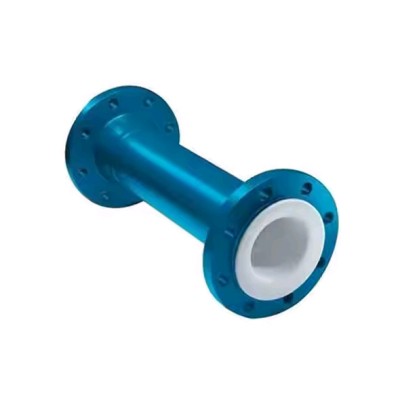
Hey there! As a supplier of PTFE Teflon tubing, I'm super excited to dive into the optical properties of this amazing material. PTFE, or polytetrafluoroethylene, is well - known for its wide range of applications, and its optical characteristics play a big part in many of them.
What is PTFE Teflon Tubing?
Before we get into the optical properties, let's quickly go over what PTFE Teflon tubing is. PTFE is a synthetic fluoropolymer of tetrafluoroethylene. It's extremely durable, resistant to high temperatures, and has a very low coefficient of friction. This makes it a top choice for various industries like chemical processing, food and beverage, and electronics. You can check out our PTFE Teflon Pipe and Teflon PTFE Pipe for more details on the products we offer.
Transparency and Clarity
One of the key optical properties of PTFE Teflon tubing is its transparency. PTFE tubing is semi - transparent. This semi - transparency can be a huge advantage in applications where you need to visually monitor the flow of liquids or gases inside the tubing. For example, in a laboratory setting, scientists can easily observe chemical reactions taking place in the tubing without having to open the system.
The clarity of PTFE tubing can vary depending on the manufacturing process. Some of our Thin Wall PTFE Tubing tends to have better clarity because the thinner walls allow for less scattering of light. The thinner the wall, the less light is absorbed or scattered as it passes through the tubing, resulting in a clearer view of the contents inside.
Light Transmission
PTFE Teflon tubing also has interesting light - transmission properties. In the visible light spectrum, it can transmit a significant amount of light. However, it's not as transparent as some other materials like glass. The light transmission of PTFE is affected by factors such as the wall thickness of the tubing, the presence of any impurities, and the surface finish.
When it comes to ultraviolet (UV) and infrared (IR) light, PTFE has different transmission characteristics. In the UV region, PTFE has relatively low transmission. This is beneficial in applications where you want to protect the contents inside the tubing from UV damage. For instance, in some pharmaceutical applications, the low UV transmission of PTFE tubing can help preserve the integrity of light - sensitive drugs.
In the IR region, PTFE has better transmission. This property is useful in applications where IR sensors or detectors are used. For example, in some industrial processes, IR light can be used to measure the temperature or composition of the fluid inside the PTFE tubing, and the relatively high IR transmission allows for accurate measurements.
Refraction and Reflection
Refraction and reflection are also important optical properties of PTFE Teflon tubing. The refractive index of PTFE is relatively low compared to many other materials. A low refractive index means that light bends less when it passes from one medium (like air) into PTFE. This can be an advantage in applications where you want to minimize optical distortion.
As for reflection, PTFE has a low reflectivity. This is because the surface of PTFE is very smooth at the molecular level, which reduces the amount of light that is reflected back. In some optical systems, the low reflectivity of PTFE tubing can help to reduce unwanted reflections and improve the overall performance of the system.
Scattering
Scattering of light in PTFE Teflon tubing can be a factor in some applications. Scattering occurs when light is redirected in different directions as it passes through the material. In PTFE, scattering can be caused by impurities, small defects in the material, or variations in the molecular structure.
However, our manufacturing process is designed to minimize scattering. We ensure that our PTFE tubing is of high purity, and we carefully control the production conditions to reduce the presence of defects. This results in tubing with better optical performance, where the scattering of light is kept to a minimum.
Applications Based on Optical Properties
The unique optical properties of PTFE Teflon tubing open up a wide range of applications. In the medical field, the semi - transparency of the tubing allows doctors and nurses to monitor the flow of intravenous fluids. The low UV transmission can also protect the medications from light - induced degradation.
In the environmental monitoring industry, PTFE tubing is used to sample gases. The ability to visually inspect the tubing for any blockages or contamination is crucial, and the semi - transparency makes this possible. The tubing's good IR transmission also allows for accurate gas analysis using IR spectroscopy.
If you're looking for a specific type of PTFE tubing, we also offer Porous PTFE Tubing, which has its own set of unique properties and applications. And for connecting different sections of PTFE tubing, our PTFE Tube Connector is a great option.
Why Choose Our PTFE Teflon Tubing?
As a supplier, we take pride in offering high - quality PTFE Teflon tubing. Our tubing is manufactured using state - of - the - art technology, ensuring consistent optical properties. We have strict quality control measures in place to make sure that each piece of tubing meets the highest standards.


Whether you need tubing for a small - scale laboratory experiment or a large - scale industrial application, we can provide the right solution for you. Our team of experts is also available to answer any questions you may have about the optical properties or the applications of our PTFE tubing.
Contact Us for Procurement
If you're interested in purchasing PTFE Teflon tubing for your project, we'd love to hear from you. Our products are designed to offer excellent optical performance and reliability. Whether you need a standard size or a custom - made solution, we can work with you to meet your requirements. Feel free to reach out to start a conversation about your procurement needs.