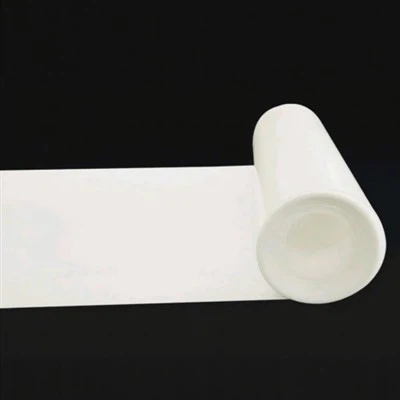
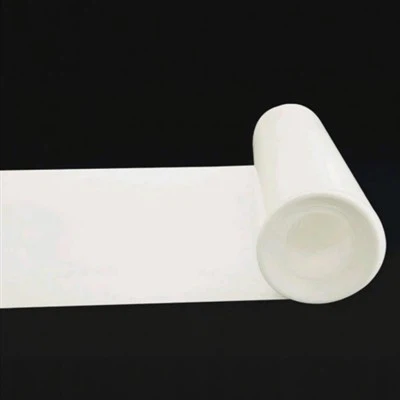
In the world of industrial materials, Teflon PTFE (Polytetrafluoroethylene) sheets stand out for their exceptional properties. As a supplier of Teflon PTFE sheets, I often encounter inquiries about the peel strength when these sheets are bonded. Peel strength is a crucial metric that determines the effectiveness and reliability of bonded Teflon PTFE sheets in various applications.
Understanding Teflon PTFE Sheets
Teflon PTFE is a synthetic fluoropolymer of tetrafluoroethylene. It is well - known for its high chemical resistance, low friction coefficient, excellent electrical insulation properties, and a wide operating temperature range from - 200°C to 260°C. These characteristics make Teflon PTFE sheets suitable for a diverse range of industries, including chemical processing, electronics, food processing, and aerospace.
There are different types of Teflon PTFE sheets available. For instance, you can find PTFE Teflon Plate Sheet, Plastic PTFE Plate, Virgin Pure PTFE Plate, Virgin Material PTFE Plate, and Teflon PTFE Plate. Each type has its own unique properties and is designed to meet specific application requirements.


What is Peel Strength?
Peel strength refers to the force required to separate two bonded materials at a specified angle and speed. In the context of Teflon PTFE sheets, it measures how well the sheet adheres to another substrate when bonded. A high peel strength indicates a strong bond, which is essential for applications where the bonded parts need to withstand mechanical stress, vibration, or environmental factors.
Factors Affecting the Peel Strength of Bonded Teflon PTFE Sheets
Surface Treatment
One of the most critical factors influencing peel strength is the surface treatment of the Teflon PTFE sheet. PTFE is known for its non - stick properties, which make it challenging to bond directly. Therefore, surface treatment is often necessary to improve adhesion. Common surface treatment methods include sodium etching, plasma treatment, and chemical priming.
Sodium etching is a traditional method that involves treating the PTFE surface with a sodium - based solution. This process creates a rough surface and introduces reactive groups, which enhance the bonding ability. Plasma treatment, on the other hand, uses high - energy plasma to modify the PTFE surface. It can clean the surface, remove contaminants, and create a more polar surface for better adhesion. Chemical priming involves applying a primer to the PTFE surface, which acts as an intermediate layer between the PTFE and the adhesive.
Adhesive Selection
The choice of adhesive also plays a significant role in determining the peel strength. Different adhesives have different chemical compositions and bonding mechanisms. For Teflon PTFE sheets, adhesives that are specifically formulated for bonding fluoropolymers are usually required. Epoxy adhesives, cyanoacrylate adhesives, and silicone adhesives are some of the common options.
Epoxy adhesives offer high strength and good chemical resistance. They can form a strong bond with the treated PTFE surface. Cyanoacrylate adhesives, also known as super glues, provide fast - curing and high - strength bonding. However, they may have limited flexibility. Silicone adhesives are known for their excellent flexibility, high - temperature resistance, and weatherability.
Bonding Process Parameters
The bonding process parameters, such as temperature, pressure, and bonding time, can significantly affect the peel strength. Proper temperature control is crucial as it can influence the flow and curing of the adhesive. For example, epoxy adhesives typically require a specific curing temperature to achieve optimal bonding strength.
Applying the right amount of pressure during the bonding process helps to ensure good contact between the PTFE sheet and the substrate, as well as to promote the spread of the adhesive. Insufficient pressure may result in voids or weak spots in the bond, while excessive pressure may damage the PTFE sheet.
The bonding time also needs to be carefully controlled. Different adhesives have different curing times, and allowing the adhesive to fully cure is essential for achieving maximum peel strength.
Measuring the Peel Strength of Bonded Teflon PTFE Sheets
To measure the peel strength of bonded Teflon PTFE sheets, standardized testing methods are used. One of the commonly used methods is the 90 - degree peel test. In this test, a bonded specimen is prepared, and one end of the PTFE sheet is peeled at a 90 - degree angle from the substrate at a constant speed. The force required to peel the sheet is measured using a tensile testing machine.
The peel strength is usually reported in units of force per unit width, such as Newtons per millimeter (N/mm). By conducting peel strength tests under different conditions, we can evaluate the performance of the bonding process and optimize the parameters to achieve the desired peel strength.
Applications of Bonded Teflon PTFE Sheets
Bonded Teflon PTFE sheets have a wide range of applications. In the chemical industry, they are used for lining pipes, tanks, and reactors to provide corrosion resistance. The strong bond ensures that the lining remains intact even when exposed to harsh chemicals.
In the electronics industry, bonded PTFE sheets are used as insulation materials for printed circuit boards (PCBs). The high peel strength ensures that the insulation layer stays firmly attached to the PCB, providing reliable electrical insulation.
In the food processing industry, bonded Teflon PTFE sheets are used on conveyor belts. The non - stick property of PTFE and the strong bond prevent food from sticking to the conveyor belt, making it easier to clean and maintain.
Ensuring High - Quality Bonded Teflon PTFE Sheets
As a Teflon PTFE sheet supplier, we are committed to providing high - quality products with excellent peel strength. We have a team of experienced engineers who can help customers choose the right type of PTFE sheet, surface treatment method, and adhesive for their specific applications.
We also conduct strict quality control measures during the production and bonding process. Our in - house testing facilities allow us to perform peel strength tests on every batch of bonded products to ensure that they meet the required standards.
Conclusion
The peel strength of bonded Teflon PTFE sheets is a critical factor that determines their performance in various applications. By understanding the factors that affect peel strength, such as surface treatment, adhesive selection, and bonding process parameters, we can optimize the bonding process to achieve high - quality bonded products.
If you are interested in purchasing Teflon PTFE sheets or need more information about their bonding and peel strength, please feel free to contact us. We are here to provide you with professional advice and high - quality products to meet your industrial needs.