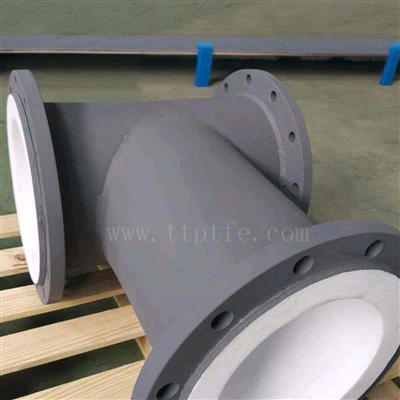
As a supplier of DN800 tees, I often encounter technical inquiries from customers, and one question that frequently comes up is about the Poisson's ratio of a DN800 tee. In this blog post, I'll delve into what Poisson's ratio is, its significance for DN800 tees, and how it relates to the performance of these essential piping components.
Understanding Poisson's Ratio
Poisson's ratio is a fundamental mechanical property that describes the relationship between the lateral strain and the axial strain of a material when it is subjected to an external force. When a material is stretched or compressed in one direction (axial direction), it will also deform in the perpendicular (lateral) directions. Poisson's ratio, denoted by the Greek letter ν (nu), is defined as the negative ratio of the transverse strain (ε_transverse) to the axial strain (ε_axial):
ν = -ε_transverse / ε_axial
The value of Poisson's ratio ranges from -1 to 0.5 for most engineering materials. For isotropic materials, which have the same mechanical properties in all directions, the theoretical upper limit of Poisson's ratio is 0.5. A value of 0.5 indicates that the volume of the material remains constant during deformation, which is the case for an ideal incompressible material. On the other hand, a value close to 0 means that the material hardly contracts or expands laterally when subjected to axial loading.
Poisson's Ratio of DN800 Tees
The Poisson's ratio of a DN800 tee depends primarily on the material from which it is made. DN800 tees can be manufactured from a variety of materials, including metals such as carbon steel, stainless steel, and ductile iron, as well as non-metallic materials like PTFE (polytetrafluoroethylene).
Metallic DN800 Tees
For metallic materials commonly used in DN800 tees, Poisson's ratio typically falls within a relatively narrow range. For example, carbon steel has a Poisson's ratio of approximately 0.3, while stainless steel has a value around 0.3 to 0.31. Ductile iron, another popular material for large-diameter tees, has a Poisson's ratio of about 0.27 to 0.29. These values indicate that when a metallic DN800 tee is subjected to axial loading, it will experience a certain amount of lateral contraction or expansion.
The Poisson's ratio of metallic tees is crucial for several reasons. Firstly, it affects the stress distribution within the tee during operation. When a tee is subjected to internal pressure or external forces, the lateral deformation due to Poisson's effect can lead to additional stresses in the tee's walls. Understanding these stress distributions is essential for ensuring the structural integrity of the tee and preventing failures such as cracking or leakage.
Secondly, Poisson's ratio plays a role in the design and installation of DN800 tees. Engineers need to consider the lateral deformation of the tee when designing the piping system to ensure that there is sufficient clearance for the tee to expand or contract without causing interference with other components. Additionally, the Poisson's effect can influence the alignment and support requirements of the tee, which are critical for maintaining the stability of the entire piping system.
PTFE Lined DN800 Tees
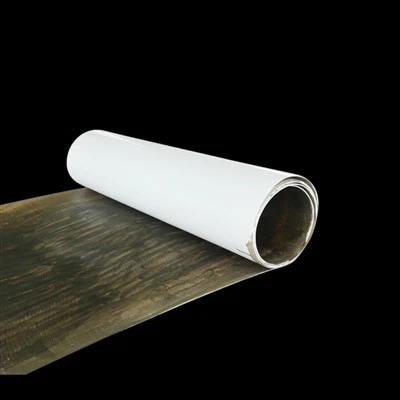
PTFE is a widely used material for lining pipes and fittings, including DN800 tees, due to its excellent chemical resistance and low friction coefficient. The Poisson's ratio of PTFE is approximately 0.45 to 0.5, which is relatively high compared to metallic materials. This high value indicates that PTFE is nearly incompressible and will undergo significant lateral deformation when subjected to axial loading.
In the case of PTFE Lined Tees, the high Poisson's ratio of PTFE has several implications. Firstly, it can affect the bonding between the PTFE lining and the metallic substrate. During installation or operation, the lateral expansion or contraction of the PTFE lining due to Poisson's effect can create shear stresses at the interface between the lining and the substrate. If these stresses are not properly managed, they can lead to delamination of the lining, which can compromise the chemical resistance and performance of the tee.
Secondly, the high Poisson's ratio of PTFE needs to be considered when designing the PTFE lining thickness. Since PTFE will expand laterally when subjected to axial loading, a thicker lining may be required to accommodate this deformation without causing excessive stress in the lining. Additionally, the design of the tee's geometry, such as the radius of curvature at the branches, may need to be optimized to minimize the stress concentration caused by the Poisson's effect.

Importance of Poisson's Ratio in Piping System Design
The Poisson's ratio of a DN800 tee is not only important for the tee itself but also for the overall design and performance of the piping system. When designing a piping system, engineers need to consider the interaction between the tee and other components, such as pipes, valves, and flanges. The lateral deformation of the tee due to Poisson's effect can affect the alignment and stress distribution of these adjacent components, which can lead to premature failures or reduced system efficiency.
For example, if a DN800 tee is connected to a straight pipe, the lateral expansion or contraction of the tee can cause misalignment between the tee and the pipe. This misalignment can create additional stresses in the pipe joints, which can increase the risk of leakage or failure. By considering the Poisson's ratio of the tee during the design phase, engineers can ensure that the piping system is properly aligned and supported to minimize these potential issues.
Applications and Considerations
DN800 tees are commonly used in various industries, including chemical processing, water treatment, and oil and gas. In each of these applications, the Poisson's ratio of the tee needs to be carefully considered to ensure optimal performance and reliability.
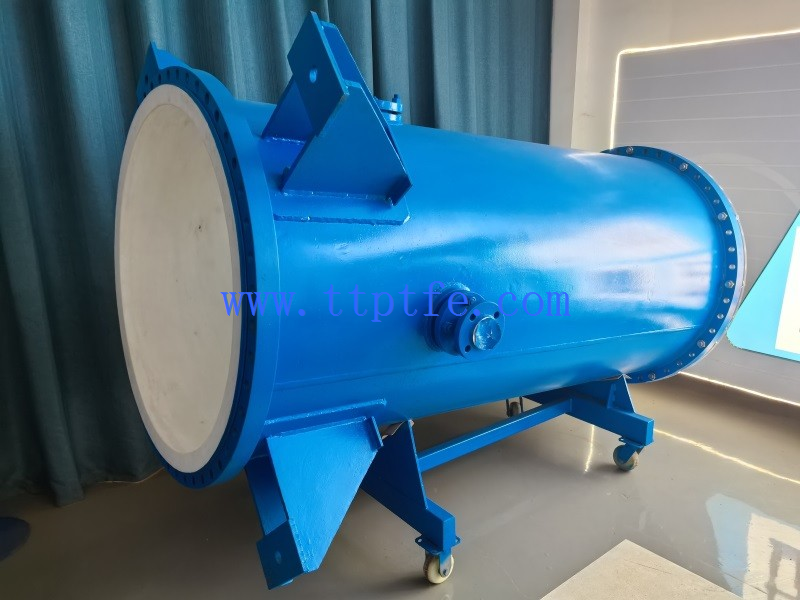
In chemical processing plants, where corrosive fluids are often transported, PTFE Tower Section and PTFE lined tees are frequently used to provide chemical resistance. The high Poisson's ratio of PTFE requires special attention during installation and maintenance to prevent lining delamination and ensure long-term performance.
In water treatment facilities, DN800 tees made of ductile iron or stainless steel are commonly used for distributing water. The Poisson's ratio of these materials affects the stress distribution in the tee under internal pressure, which is crucial for ensuring the structural integrity of the tee and preventing water leakage.
In the oil and gas industry, DN800 tees are used in pipelines for transporting crude oil, natural gas, and other fluids. The Poisson's ratio of the tee material needs to be considered in conjunction with other factors such as temperature, pressure, and fluid flow rate to ensure safe and efficient operation of the pipeline.
Conclusion
In conclusion, the Poisson's ratio of a DN800 tee is a critical mechanical property that affects its performance, design, and installation. Whether the tee is made of metal or lined with PTFE, understanding the Poisson's ratio is essential for ensuring the structural integrity, chemical resistance, and overall reliability of the tee and the entire piping system.
As a supplier of DN800 tees, we are committed to providing high-quality products that meet the specific requirements of our customers. Our team of experts can assist you in selecting the right material and design for your application, taking into account factors such as Poisson's ratio, pressure rating, and chemical compatibility. If you are in the market for DN600 PTFE or other PTFE lined products, or if you have any questions about our DN800 tees, please feel free to contact us for a detailed consultation. We look forward to working with you to meet your piping needs.
References
- Callister, W. D., & Rethwisch, D. G. (2011). Materials Science and Engineering: An Introduction. Wiley.
- ASME B31.3 Process Piping Code.
- PTFE Material Data Sheets from major manufacturers.