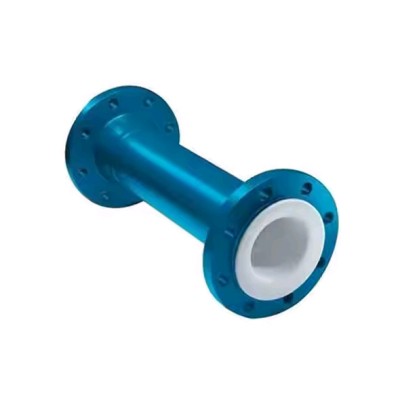
What is the specific gravity of a PTFE lined pipe?
As a seasoned supplier of PTFE lined pipes, I've encountered numerous inquiries regarding the specific gravity of these pipes. Specific gravity is a crucial property that influences various aspects of PTFE lined pipes, from their performance to their applications. In this blog post, I'll delve into the details of the specific gravity of PTFE lined pipes, its significance, and how it relates to our products.
Understanding Specific Gravity
Specific gravity, also known as relative density, is the ratio of the density of a substance to the density of a reference substance. For liquids and solids, the reference substance is usually water at 4°C, which has a density of 1 g/cm³. Therefore, the specific gravity of a substance indicates how many times denser it is compared to water.
Specific Gravity of PTFE
Polytetrafluoroethylene (PTFE), the material used to line the pipes, has a specific gravity ranging from 2.13 to 2.22. This relatively high specific gravity is due to the high molecular weight and the dense packing of the PTFE molecules. The specific gravity can vary slightly depending on factors such as the manufacturing process, the presence of additives, and the degree of crystallinity.
Significance of Specific Gravity in PTFE Lined Pipes
The specific gravity of PTFE plays a significant role in the performance and application of PTFE lined pipes. Here are some key aspects:
- Mechanical Properties: The high specific gravity of PTFE contributes to its excellent mechanical properties, such as high tensile strength and abrasion resistance. This makes PTFE lined pipes suitable for applications where the pipes are subjected to high pressure, friction, and wear.
- Chemical Resistance: PTFE is known for its exceptional chemical resistance, and the specific gravity is related to this property. The dense molecular structure of PTFE, which is reflected in its high specific gravity, makes it resistant to a wide range of chemicals, including acids, bases, and solvents.
- Buoyancy and Weight: The specific gravity of PTFE affects the buoyancy and weight of the lined pipes. PTFE lined pipes are heavier than pipes made of some other materials, which can be an important consideration in applications where weight is a factor, such as in offshore or aerospace applications.
- Thermal Properties: The specific gravity of PTFE also influences its thermal properties. PTFE has a low coefficient of thermal expansion, which means that it does not expand or contract significantly with changes in temperature. This property is related to the high specific gravity and the strong intermolecular forces in PTFE.
Applications of PTFE Lined Pipes Based on Specific Gravity
The specific gravity of PTFE lined pipes makes them suitable for a wide range of applications across various industries. Here are some examples:
- Chemical Processing: In the chemical industry, PTFE lined pipes are used to transport corrosive chemicals, such as sulfuric acid, hydrochloric acid, and sodium hydroxide. The high specific gravity and chemical resistance of PTFE ensure the safe and reliable transport of these chemicals.
- Food and Beverage: PTFE lined pipes are also used in the food and beverage industry due to their non - toxic and hygienic properties. The specific gravity of PTFE helps in maintaining the structural integrity of the pipes during the handling of food and beverage products.
- Pharmaceutical: In the pharmaceutical industry, PTFE lined pipes are used for the transfer of pharmaceutical ingredients and solutions. The high specific gravity and chemical resistance of PTFE prevent contamination and ensure the purity of the products.
- Electronics: PTFE lined pipes are used in the electronics industry for the transfer of chemicals and gases during the manufacturing process. The specific gravity of PTFE helps in maintaining the stability and performance of the pipes in the high - precision electronics manufacturing environment.
Our PTFE Lined Pipe Products
As a PTFE lined pipe supplier, we offer a wide range of products with different specifications to meet the diverse needs of our customers. Our products include Thin Wall PTFE Tubing, Virgin Teflon Pipe, and Teflon Sleeving Tubing.
Our PTFE lined pipes are manufactured using high - quality PTFE materials with a specific gravity within the standard range of 2.13 to 2.22. We ensure strict quality control during the manufacturing process to guarantee the performance and reliability of our products. Our pipes are available in various sizes, thicknesses, and configurations to suit different applications.
Factors Affecting the Specific Gravity of PTFE Lined Pipes
While the specific gravity of PTFE is relatively consistent, there are some factors that can affect the specific gravity of PTFE lined pipes:
- Additives: The addition of certain additives, such as fillers or reinforcements, can change the specific gravity of PTFE. For example, the addition of glass fiber or carbon fiber can increase the specific gravity and improve the mechanical properties of the pipes.
- Manufacturing Process: The manufacturing process can also influence the specific gravity of PTFE lined pipes. Different processing methods, such as extrusion or molding, can result in different degrees of crystallinity and packing density of the PTFE molecules, which in turn affect the specific gravity.
- Lining Thickness: The thickness of the PTFE lining can also have an impact on the overall specific gravity of the lined pipe. A thicker lining will generally result in a higher specific gravity for the pipe.
Measuring the Specific Gravity of PTFE Lined Pipes
Measuring the specific gravity of PTFE lined pipes is an important quality control step. There are several methods available for measuring specific gravity, including:
- Archimedes' Principle: This method involves measuring the weight of the pipe in air and then in water. The difference in weight is used to calculate the volume of the pipe, and the specific gravity is then determined by dividing the weight in air by the weight of an equal volume of water.
- Density Gradient Column: In this method, the pipe sample is placed in a density gradient column, which contains a liquid with a varying density. The sample will float at a level where its density is equal to the density of the liquid, and the specific gravity can be read from the calibrated column.
Conclusion
The specific gravity of a PTFE lined pipe is an important property that affects its performance, application, and manufacturing. With a specific gravity ranging from 2.13 to 2.22, PTFE lined pipes offer excellent mechanical, chemical, and thermal properties. As a PTFE lined pipe supplier, we are committed to providing high - quality products that meet the specific requirements of our customers.
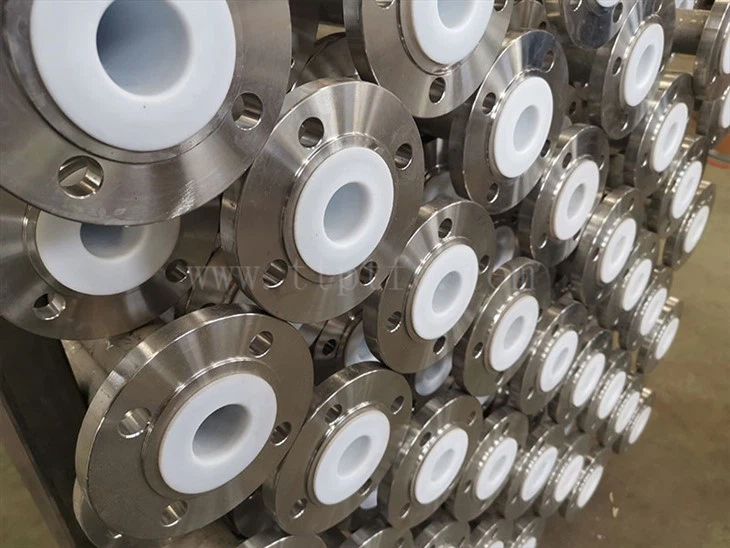

If you are interested in our PTFE lined pipe products or have any questions about the specific gravity or other properties of our pipes, we encourage you to contact us for further discussion and potential procurement. Our team of experts is ready to assist you in finding the most suitable solution for your needs.
References
- "Handbook of Fluoropolymer Science and Technology" by Harry B. Mark Jr., Norman M. Bikales, Charles G. Overberger, and Gottlieb Menges.
- "Polytetrafluoroethylene (PTFE): Properties, Applications, and Processing" by various authors in polymer science research journals.