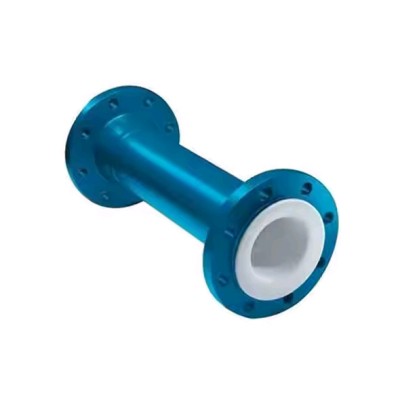
Hey there! As a supplier of steel lined PTFE cross, I often get asked about how its weight stacks up against other similar products. So, I thought I'd take a deep - dive into this topic and share some insights with you.
Let's start by understanding what a steel lined PTFE cross is. A steel lined PTFE cross is a crucial component in many piping systems. It's made up of a steel outer shell that provides structural strength and durability. The PTFE lining, on the other hand, offers excellent chemical resistance, low friction, and non - stick properties. This combination makes it ideal for use in industries where handling corrosive chemicals is a daily routine, like the chemical processing, pharmaceutical, and food industries.
Now, let's compare its weight with other similar PTFE - lined products.
Comparison with PTFE Four Way
First up is the PTFE Four Way. At a glance, the steel lined PTFE cross and the PTFE four - way might seem similar, as they both are designed to connect four pipes. However, there are differences in their weight.
The weight of a PTFE four - way can vary depending on its size and the thickness of the PTFE lining. Generally, if the dimensions are the same, the steel lined PTFE cross is likely to be heavier. This is because the cross has a more complex internal structure. The steel lining in the cross needs to support the PTFE layer at multiple junctions, which often means a thicker steel shell. In the PTFE four - way, the design might be more streamlined in some cases, resulting in a lighter overall weight. But if the PTFE four - way is also steel - lined, the weight difference might be less significant, and it would mainly come down to the specific manufacturing processes and the amount of steel used in each product.
Comparison with PTFE Elbow
Next, let's talk about the PTFE Elbow. PTFE elbows are used to change the direction of a piping system, usually at 90 - degree or 45 - degree angles.
In terms of weight, the steel lined PTFE cross is almost always heavier. An elbow has a relatively simple structure compared to a cross. It only has to connect two pipes at an angle, so the amount of steel and PTFE required is less. The cross, with its four - way connection, needs more material for both the steel outer layer and the PTFE lining. For example, a small - sized PTFE elbow might weigh around a few kilograms, while a similarly sized steel lined PTFE cross could weigh double or even more.
Comparison with PTFE Virgin Sheet
The PTFE Virgin Sheet is a flat material, and its main use is often for lining surfaces or creating gaskets.
When comparing the weight of a steel lined PTFE cross to a PTFE virgin sheet, it's like comparing apples and oranges. The sheet is a two - dimensional material, and its weight is calculated based on its area, thickness, and density. A steel lined PTFE cross, being a three - dimensional object with a complex shape, has a completely different weight - calculation scenario. However, if you take a sheet of PTFE the same size as the cross's surface area and similar PTFE thickness, the cross will still be heavier because of the additional weight of the steel shell.


Comparison with PTFE Lined Tee
The PTFE Lined Tee is somewhat similar to the cross as both are used to connect multiple pipes. A tee is mainly used to divide or combine the flow of a fluid in a piping system, with one inlet and two outlets.
The weight difference between a steel lined PTFE cross and a PTFE lined tee depends on their size and the manufacturing details. Generally, the cross is heavier. The cross has one more connection point than the tee, which means more steel and PTFE are needed. The steel structure in the cross has to be designed to handle forces from four directions, while the tee only deals with three. So, for the same pipe diameter and wall thickness specifications, you can expect the cross to tip the scales more.
Comparison with PTFE Lined Corrugated Compensator
The PTFE Lined Corrugated Compensator is used to absorb thermal expansion and contraction in a piping system.
In terms of weight, the steel lined PTFE cross and the PTFE lined corrugated compensator can vary greatly. The compensator's weight is highly influenced by the number of corrugations, its length, and the thickness of the PTFE lining. If the compensator is relatively short and has a small number of corrugations, the steel lined PTFE cross will be heavier. The cross has a more solid structure with a continuous steel and PTFE combination, while the compensator has a more flexible and often lighter - weight design due to its corrugated nature. But if the compensator is large and has many corrugations, it could potentially weigh more than a small - sized steel lined PTFE cross.
So, why does the weight matter? Well, in a piping system installation, weight affects many things. Handling heavy components requires more effort and possibly specialized equipment. Heavier products also put more stress on the supporting structures. On the other hand, a heavier product like the steel lined PTFE cross can sometimes mean more stability and durability.
If you're in the market for a PTFE - lined product and are considering the weight as a factor in your decision - making process, I'd be more than happy to help. Whether you're not sure about which product is the best fit for your project or you want more detailed weight comparisons, feel free to reach out. We can have a chat about your specific needs and find the product that works best for you.