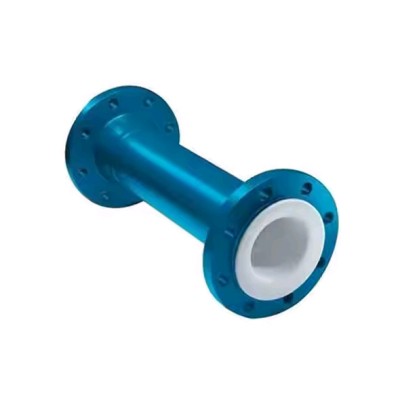
Hey there! If you've landed on this blog, chances are you're curious about the expansion coefficient of a round PTFE lined pipe. Well, you're in the right place! As a supplier of round PTFE lined pipes, I've got tons of knowledge to share on this topic.
What is PTFE?
First things first, let's talk about PTFE. That's Polytetrafluoroethylene for those who aren't in the know. It's a synthetic fluoropolymer of tetrafluoroethylene, and it's pretty amazing stuff. You might know it by its brand name, Teflon. PTFE has some really cool properties. It's super resistant to heat, chemicals, and it has a low friction coefficient. That's why it's used in so many applications, especially in lining pipes.
Why Use PTFE Lined Pipes?
Round PTFE lined pipes are a game - changer in many industries. They're used in chemical processing, food and beverage, and even in some pharmaceutical applications. The PTFE lining acts as a barrier between the pipe and the fluid or gas flowing through it. This helps prevent corrosion, which can be a huge problem in many industrial settings.
For example, in the chemical industry, where corrosive chemicals are often transported, a Carbon Steel PTFE Lined Pipe can withstand the harsh chemicals without getting damaged. This means less maintenance, fewer leaks, and a longer lifespan for the piping system.


What is the Expansion Coefficient?
Now, let's get to the main question: what is the expansion coefficient of a round PTFE lined pipe? The expansion coefficient, also known as the coefficient of thermal expansion, is a measure of how much a material will expand or contract when its temperature changes.
PTFE has a relatively high coefficient of thermal expansion compared to some other materials. The linear coefficient of thermal expansion of PTFE is approximately 100 - 200 x 10⁻⁶ /°C. That means for every degree Celsius increase in temperature, a PTFE material will expand by about 100 - 200 millionths of its original length.
This is important to consider when using round PTFE lined pipes. If the temperature of the fluid or gas flowing through the pipe changes significantly, the PTFE lining will expand or contract. If this isn't accounted for, it can lead to problems such as the lining separating from the pipe, or even the pipe itself getting damaged.
Factors Affecting the Expansion of PTFE Lined Pipes
There are several factors that can affect the expansion of round PTFE lined pipes.
- Temperature Range: The bigger the temperature change, the more the PTFE lining will expand or contract. If you're dealing with a process that has a wide temperature range, you need to be extra careful.
- Pipe Material: The material of the outer pipe also plays a role. Different materials have different expansion coefficients. If the expansion coefficient of the outer pipe is very different from that of the PTFE lining, it can cause issues. For example, if the outer pipe expands less than the PTFE lining when heated, the lining may buckle.
- Pipe Design: The design of the pipe, including its thickness and shape, can affect how the PTFE lining behaves during temperature changes. A well - designed pipe will be able to accommodate the expansion and contraction of the lining without any problems.
Dealing with Expansion in PTFE Lined Pipes
So, how do we deal with the expansion of round PTFE lined pipes?
One way is to use expansion joints. These are flexible sections in the piping system that can absorb the expansion and contraction of the PTFE lining. Expansion joints are especially useful in long runs of pipe where the temperature changes are significant.
Another option is to choose the right pipe material. For instance, some materials have a similar expansion coefficient to PTFE. Using these materials for the outer pipe can reduce the stress on the lining during temperature changes.
Our Products and Their Expansion Considerations
As a supplier of round PTFE lined pipes, we take the expansion coefficient very seriously. Our Anti Corrosion PTFE Teflon Tube and PTFE Lined Pipe Fittings are designed with the expansion of PTFE in mind. We use high - quality materials for the outer pipes and ensure that our products can handle a wide range of temperatures.
We also offer a range of expansion joints and other accessories to help our customers deal with the expansion and contraction of the PTFE lining. Our team of experts is always available to provide advice on the best solutions for your specific application.
Conclusion
The expansion coefficient of a round PTFE lined pipe is an important factor to consider in many industrial applications. Understanding how PTFE expands and contracts with temperature changes can help you avoid problems such as lining separation and pipe damage.
If you're in need of round PTFE lined pipes, our company has got you covered. We offer a wide range of products that are designed to handle the expansion and contraction of PTFE. Whether you're working in the chemical industry, food and beverage, or any other field that requires corrosion - resistant piping, we can provide you with the right solutions.
If you're interested in our products or have any questions about the expansion coefficient of PTFE lined pipes, don't hesitate to reach out to us. We're more than happy to discuss your needs and find the perfect products for your project. Let's start the conversation and get you the best round PTFE lined pipes for your application!
References
- "Handbook of Fluoropolymer Science and Technology" by volume editors Krishna Mittal, Thomas Tran
- "Chemical Resistance of PTFE and Other Fluoropolymers" by various industry experts in chemical engineering