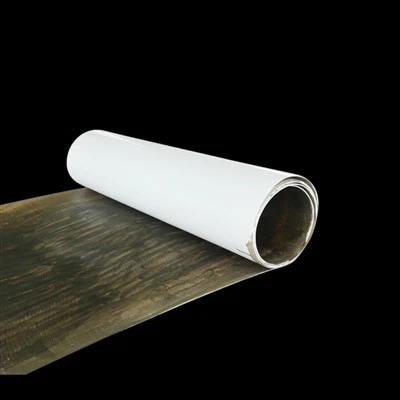
Teflon PTFE (Polytetrafluoroethylene) sheets are a remarkable material known for their wide range of applications across various industries. One of the key properties that make them so valuable is their fatigue resistance. In this blog, as a Teflon PTFE sheet supplier, I will delve into what fatigue resistance is in the context of Teflon PTFE sheets, why it matters, and how it impacts different applications.
Understanding Fatigue Resistance
Fatigue resistance refers to a material's ability to withstand repeated loading or stress cycles without failing or experiencing significant degradation. When a material is subjected to cyclic stress, such as bending, flexing, or vibration, it can develop microscopic cracks over time. These cracks can propagate and eventually lead to the failure of the material. A material with high fatigue resistance can endure a large number of stress cycles before reaching the point of failure.
In the case of Teflon PTFE sheets, fatigue resistance is crucial because they are often used in applications where they are exposed to repetitive motion or stress. For example, in the automotive industry, PTFE sheets may be used in gaskets or seals that experience constant pressure changes and vibrations. In the aerospace industry, they can be found in components that are subjected to repeated mechanical forces during flight.
Factors Affecting the Fatigue Resistance of Teflon PTFE Sheets
Material Quality
The quality of the raw materials used to produce Teflon PTFE sheets plays a significant role in their fatigue resistance. Virgin Material PTFE Plate is typically of higher quality compared to PTFE made from recycled materials. Virgin PTFE has a more uniform molecular structure, which results in better mechanical properties, including fatigue resistance. Our company ensures that we source the highest - quality virgin materials to manufacture our Teflon PTFE sheets, providing our customers with products that can withstand long - term cyclic stress.
Sheet Thickness
The thickness of the Teflon PTFE sheet also affects its fatigue resistance. Generally, thicker sheets have better fatigue resistance because they can distribute the stress more evenly across their cross - section. However, the relationship between thickness and fatigue resistance is not always linear. Very thick sheets may also introduce additional challenges, such as increased weight and cost. Thickness PTFE Plate Teflon Plate options are available to meet different application requirements. Thicker sheets are suitable for applications where high stress and long - term durability are needed, while thinner sheets may be used in applications where weight and flexibility are more important.
Manufacturing Process
The manufacturing process of Teflon PTFE sheets can have a profound impact on their fatigue resistance. Processes such as extrusion, molding, and sintering need to be carefully controlled to ensure the uniformity of the material. Any defects or inconsistencies in the manufacturing process can create weak points in the sheet, reducing its fatigue resistance. Our state - of - the - art manufacturing facilities use advanced techniques and strict quality control measures to produce Teflon PTFE sheets with excellent fatigue resistance.
Importance of Fatigue Resistance in Different Applications
Industrial Applications
In industrial settings, Teflon PTFE sheets are used in conveyor belts, seals, and gaskets. These components are often subjected to continuous movement and pressure. For example, in a chemical processing plant, PTFE gaskets are used to seal pipes and containers. The gaskets need to maintain their integrity over a long period, even when exposed to harsh chemicals and repeated pressure changes. The high fatigue resistance of Teflon PTFE sheets ensures that these gaskets can perform their function effectively without leaking or failing, reducing downtime and maintenance costs.


Electrical Applications
In the electrical industry, PTFE sheets are used as insulating materials. They are often found in printed circuit boards (PCBs) and electrical connectors. These components may experience thermal cycling and mechanical vibrations during normal operation. The fatigue resistance of PTFE sheets is crucial to prevent cracking or delamination, which could lead to electrical failures. A reliable PTFE insulation material can ensure the long - term performance and safety of electrical systems.
Medical Applications
Teflon PTFE sheets are also used in medical devices, such as catheters and surgical implants. In these applications, the material needs to withstand repeated bending and flexing without breaking or releasing harmful particles. The high fatigue resistance of PTFE sheets ensures the safety and effectiveness of medical devices, providing patients with reliable treatment options.
Testing the Fatigue Resistance of Teflon PTFE Sheets
To ensure the quality and performance of our Teflon PTFE sheets, we conduct rigorous testing of their fatigue resistance. One common method is the cyclic loading test, where the sheet is subjected to a specific number of stress cycles at a given frequency and amplitude. The test is carried out until the sheet fails or shows significant signs of degradation. By analyzing the test results, we can determine the fatigue life of the sheet and make adjustments to the manufacturing process if necessary.
Another important test is the flexural fatigue test, which measures the ability of the sheet to withstand repeated bending. This test is particularly relevant for applications where the sheet is bent or flexed repeatedly, such as in conveyor belts or electrical connectors. The results of these tests help us to provide our customers with accurate information about the performance of our products and to recommend the most suitable Teflon PTFE sheets for their specific applications.
Choosing the Right Teflon PTFE Sheet for Your Application
When selecting a Teflon PTFE sheet for your application, it is important to consider the fatigue resistance requirements. If your application involves high - stress cyclic loading, you may need to choose a thicker sheet or a sheet made from high - quality virgin material. Our company offers a wide range of Teflon PTFE Plate options to meet different needs. Our experienced technical team can provide you with professional advice on selecting the most appropriate sheet based on your specific application and performance requirements.
In addition to fatigue resistance, other factors such as chemical resistance, thermal stability, and electrical properties should also be considered. Our Teflon PTFE sheets are known for their excellent combination of these properties, making them suitable for a wide range of applications.
Conclusion
The fatigue resistance of Teflon PTFE sheets is a critical property that determines their performance and durability in various applications. As a Teflon PTFE sheet supplier, we are committed to providing our customers with high - quality products that can withstand the challenges of cyclic stress. Our products are manufactured using the best raw materials and advanced manufacturing processes, and we conduct comprehensive testing to ensure their quality.
If you are in need of Teflon PTFE sheets for your application, we encourage you to contact us for more information. Our team can help you select the right product and answer any questions you may have. We look forward to discussing your requirements and providing you with a solution that meets your needs.
References
- "Handbook of PTFE and Fluoroplastics" by Klaus Uhlig
- "Engineering Properties of Polymers" by Charles A. Harper
- "Plastics in Medical Devices: Properties, Requirements, and Applications" by David M. Biggs et al.