


PTFE Tubing
Yancheng Tongtong Industrial Technology Co.,Ltd
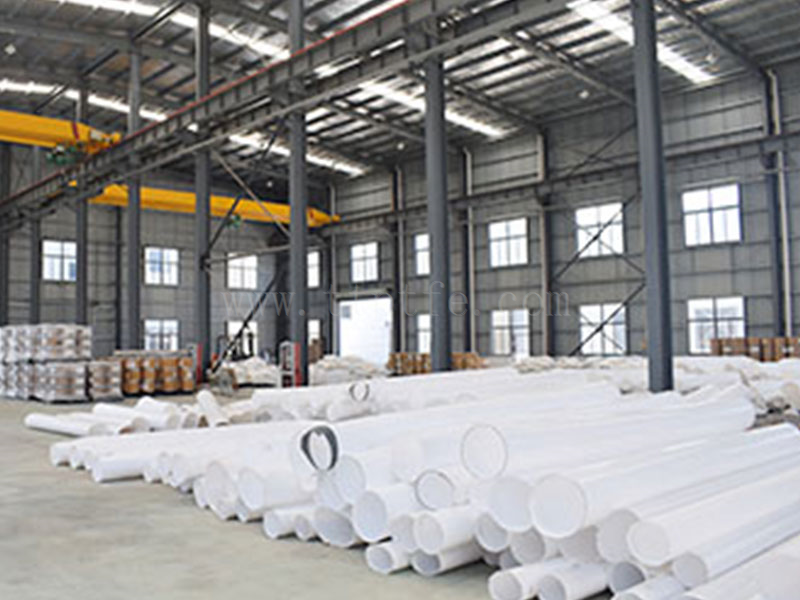
Most of the pipes designed and developed by Yancheng Tongtong Fluorine Plastic Manufacturing Co.,Ltd. are mostly supplied by OEMs to the UK, France, the United States, Germany and many other companies. The factory is located in Yancheng, the beautiful coast of the Yellow Sea. Founded in 2007, it has 150 sets of special equipment and 100 special pipelines. The factory continues to operate in ISO9001:2000 quality system. With strong technical force, there are more than 20 middle and senior technicians in undergraduate and junior colleges. The design adopts the most advanced Japanese technology, and the research and development speed is fast, which can meet the various needs of customers.
Why Choose Us
Our factory
The factory is located in Yancheng, the beautiful coast of the Yellow Sea. Founded in 2007, it has 150 sets of special equipment and 100 special pipelines. The factory continues to operate in ISO9001:2000 quality system.
Advanced technology
With strong technical force, there are more than 20 middle and senior technicians in undergraduate and junior colleges. The design adopts the most advanced Japanese technology, and the research and development speed is fast, which can meet the various needs of customers.
Wide range of applications
The pipes produced by Tongtong are mainly used in the fields of machinery, chemical industry, aviation, electrical and electronics, national defense industry, cutting-edge technology, medical and electrical insulation and electrical insulation.
Our produce
The existing PTFE tubes, PTFE Plates , PTFE gaskets, PTFE Fittings and Equipments, and has the ability to develop and produce various PTFE products. Excellent products are praised by customers at home and abroad.

Thin-walled polytetrafluoroethylene (PTFE) pipes usually refer to polytetrafluoroethylene (PTFE) pipes with thinner wall thickness.
Bronze-filled PTFE (polytetrafluoroethylene) is a composite material that enhances its properties by adding bronze (a copper-tin alloy) as a filler to the PTFE matrix.

PTFE (Polytetrafluoroethylene), commonly known by the brand name Teflon, is a versatile and highly durable material used in various piping applications. PTFE Teflon pipes are renowned for their unique properties that make them suitable for a wide range of demanding environments.

PTFE tubing is utilized in automotive and aerospace applications due to its resistance to high temperatures, chemicals, and fuels.

Teflon tubes have a very low coefficient of friction, and almost all substances do not bond with PTFE coatings, making them very suitable for food processing, chemical pipelines and other fields.

PTFE (Polytetrafluoroethylene) pneumatic tubing is a specialized type of tubing designed for pneumatic applications where high performance and reliability are essential.

Rigid PTFE tubing combines superior chemical resistance, high temperature tolerance, low friction, electrical insulation, and biocompatibility, making it a preferred choice in industries ranging from chemical processing and automotive to medical devices and electronics.

The porous PTFE tubing's unique combination of permeability, chemical resistance, biocompatibility, and thermal stability makes it highly advantageous for a wide array of applications across different industries.

Black graphite Teflon tubing is a special type of polytetrafluoroethylene (PTFE) tubing that incorporates fillers such as graphite to enhance its performance.
What is PTFE Tubing
The unique properties of PTFE tubing cover an impressive range. These include high use temperature compared to other polymers, almost universal chemical resistance, excellent electrical properties at high voltage and high signal frequencies, non-stick characteristics, usefulness under extreme low temperatures (cryogenic conditions), and UV resistance. PTFE tubing's high viscosity in the gel state (it does not truly melt) prevents it from being processed conventionally in extruders or injection molding. PTFE tubing is therefore dry molded or extruded in hydraulic extruders with (paste extrusion) or without (ram extrusion) lubricants. Paste extrusion of PTFE yields flexible tubing.
Advantages of PTFE Tubing
Chemical resistance of PTFE
One of the primary benefits of using PTFE tube is their exceptional chemical resistance. PTFE is highly resistant to a wide range of chemicals, including acids, bases, and organic solvents. This makes it an ideal material for use in applications that involve the handling of corrosive liquids or gases.
Temperature resistance of PTFE
Another major benefit of PTFE tube is their high-temperature resistance. PTFE tube can withstand temperatures up to 260℃, making them suitable for use in high-temperature environments such as furnace linings, heat exchangers, and ovens. Furthermore, PTFE tube have a low coefficient of thermal expansion, which means that they maintain their shape and size at high temperatures. This makes them an ideal material for use in applications that involve high-temperature changes, such as thermal cycling.
Low friction
PTFE tube also offer low friction properties, which make them an excellent choice for use in applications that require low-friction movement. For example, PTFE tube are commonly used in the production of bearings and bushings, as they reduce the potential for wear and tear on the moving parts. Additionally, PTFE tube are used in the production of seals, gaskets, and o-rings, as they reduce the potential for leaks and spills.
Resistance to ware and tear
PTFE tube are also highly resistant to wear and tear, which makes them an ideal material for use in applications that involve high mechanical loads. PTFE tube have a high compressive strength and a low coefficient of friction, which means that they can withstand high mechanical loads without deforming or wearing out. This makes them an ideal material for use in applications such as gears, cams, and bushings.
Types of PTFE Tubing
High-Pressure Hoses
High-pressure PTFE hoses combine lightweight construction with a natural or anti-static PTFE liner. They are available in different reinforcing styles like braid, bunch braid, and spiral/braid combinations. These hoses are ideal for chemical, gas, high-purity, hydraulic, and most gas applications.
Spaghetti Tubing
Spaghetti tubing refers to smaller-diameter extruded or smoothbore PTFE tubing primarily used in the electronics industry. Key properties include PTFE's unique temperature resistance and dielectric strength.
Pipe Liners
PTFE-lined pipes provide a long-term, cost-effective solution for transferring or storing highly corrosive fluids under harsh conditions. The chemically inert PTFE liner can withstand many corrosive liquids at high pressures and temperatures.
Other Types
- Split PTFE tubes have a ridge on the inside wall allowing them to be split lengthwise, enabling removal of PTFE introducers without dislocating the central system.
- Heat shrinkable PTFE tubing uses an extremely thin polymer that shrinks when exposed to hot air, enabling manufacturing of wires, glass tubes, and insulation.
- Multi-lumen PTFE tubing has a single large tube with several smaller tubes inside, each containing a different fluid or wire. Used in various medical applications.
- Filled PTFE tubing contains chemical additives to enhance properties like visibility on X-rays or anti-static properties.
Some Common uses of PTFE Tubing
Chemical Industry
Because of their high chemical resistance to almost all chemicals, PTFE tubes are ideal for use in the chemical industry. This includes the semiconductor industry. Modern processes in semiconductor production require the safe metering and transport of corrosive liquids (acids and bases). These can severely damage the delivery tube in a short period of time.
Automobile industry
In a car engine, high-quality tubing made of PTFE is used for fuel evaporation and fuel rails. Such as fuel hoses, turbocharger hoses, coolant hoses, automatic brake hoses, motorcycle brake hoses, diesel engine hoses, racing hoses and power steering hoses. The characteristics of high temperature and low temperature resistance, high pressure resistance, wear resistance and corrosion resistance of PTFE tube make it have a long service life without frequent replacement.
3D printing industry
In 3D printing, the filament should be transferred to the printing nozzle, which must be done in a high temperature range. PTFE tubing is the most preferred polymer in the 3D printing industry due to its high temperature coefficient and non-stick properties, which help slide the material easily from the nozzle.
Medical industry
Special properties of PTFE tubes also include an easy-to-clean surface structure. In the past decade, PTFE tubing has been increasingly used in medical devices. Due to the low coefficient of friction of PTFE tubing, it means that it has a very smooth surface that neither masks nor aids bacterial growth. Among them, hoses are used for cannulas, catheters, pipettes and endoscopes.
Food industry
Due to its easy cleaning and non-stick properties, PTFE tubing can be used in the food industry. In particular, tubes made of unfilled PTFE are suitable due to their physiological neutrality and comply with US Food and Drug Administration guidelines. Therefore, it has been proven harmless in contact with plastic and any type of food.
Medical Grade PTFE Tubing Buying Guide
Material quality and purity: Medical grade PTFE tubing needs to be of high quality and ultimate purity for guarantee the reliability and safety of medical application. To insure that the quality of the material that you have sourced is as per the requirement, always insist for the quality certificates and compliance being adhered to such as ISO 13485, USP class VI compliance etc. Make sure the PTFE tubing material you choose is compliant with medical industry regulations and standards.
Size and dimensions: Choose the correct diameter, wall thickness, and length needed for medical device manufacturing. Make sure the chosen PTFE tubing meets the design requirement (fluid pressure and temperature) so that performs well under requried conditon.
Chemical Resistance, Biocompatibility: A medical grade PTFE tubing is doing the safe and reliable interaction with fluids, and human tissue as the tubing must be chemically resistant and biocompatible. Make certain your selected supplier can supply chemical resistance and biocompatibility test reports and certificates on the material.
Surface smoothness: In some cases, the surface smoothness of the PTFE tubing is crucial for medical device applications. Be sure that the supplier produces the PTFE tubing in an environment that meets the required cleanliness standards, i.e. ISO 14644 cleanroom class. This lowers the risk of fluid pollution by reducing the roughness of the tube surface and the emergence of micro-sized particles this prevents fluid pollution.
Supplier reputation and technical support, it is better to choose the supplier of the product that meets the standards and requirements, which is a must for the medical industry. Know the supplier's production capacity, quality management and after-sales service to make sure that they have ability on the technical support and problem-solving.
Know your needs: It is important to know what you need before buying. Detail pipes, dimensions like pipe spec, size, length, and quantity to ensure acceptable for medical device manufacturing Also, know if features like temperature resistance, chemical stability, and biocompatibility are in line with laws and standards.
Quality management: At all times ensure that the supplier has a very reputable high quality administration system in position to guarantee the high quality of the PTFE tubing. Ask the suppliers to offer certifications and quality assurance documents such as ISO 9001 certificate and ROHS compliant proof. Do regular supplier audits how about product quality inspections to verify the quality of the tubes.
Comparing prices and deal finding : Quality is another important factor in buying, after this price is the synthesis. ProcurementProcurement acts as the mediator between the user and the supplier or service supplier where they negotiate, negotiate prices with suppliers. It then includes factors such as costs of the material, costs of transportation, and continuity of supply chain or sustainability to arrive at a valid price.
Handling: Handling resin is among the most easily overlooked aspects of PTFE processing. While many resin manufacturers specifically layout guidelines for limiting the shear on the resin before processing, these become even more important where tubing is concerned. Due to the structure of PTFE tubing, the fibrils that form during extrusion are paramount to the strength of the final tubing. Excessive shearing of the resin before extrusion can cause a poor formation of fibrils and seriously hinder the achievement of good final properties
Blending: The parameters within blending include the type of extrusion aid used (the surface tension of the aid needs to be less than that of PTFE, while also not having a volatility and/or flash point that can cause fires during sintering), the amount of extrusion aid used, the RPM of the blending process and the post blending storage of the fine power mixture. Since our unit is in India, we need to follow a slightly different process to that in colder countries. For starters, we need to artificially cool the resin to allow of a more easy mixture of the PTFE with the extrusion aid. Such nuances are only learnt through extensive trial and error. But unless the blending is done in the correct manner, the final extrudate will be either too soft or too dry. Furthermore, unless the blend is uniform, the preform billet will have uneven densities, causing issues during extrusion.
Preforming: Preforming is done purely as a means to create a shape that can be fitted into the extruder. Preforming has two functions: first, it gives shape and second, it removes any air pockets from within the material. The process needs to be done keeping in mind that too little pressure will not allow for an adequate venting of the air within the material. Air pockets result in bursts during the extrusion, which damage the tubing and render it unusable. Too much pressure and the extrusion aid may get squeezed out of the preform, causing the extrudate to be too dry and increasing the extrusion pressure required to form the tube.
Extrusion: While extrusion is understandably the most important step, by the time the preform billet is loaded into the extruder, the preceding processes have already defined a lot of the tube's final characteristics. Nonetheless, extrusion offers the tube it's the final shape and this process needs to maintain both adequate pressures on the billet while ensuring the concentricity of the final tube. If the pressure is too high or too low, the tube will experience either too much shear, or too little pressure to form a proper end-product respectively. Concentricity is dependent not only on the tooling within the extruder (which needs to be precise and offer the correct extrusion angles depending on the size of the tube being drawn) but also on the uniformity of the billet's density (discussed above). Finally, the extruder itself needs to be capable of offering a uniform load, so as to ensure the billet is under constant and non-erratic pressure throughout the extrusion run.
SinteringWhen heating the tube, the temperature needs to account for both a drying section as well as a sintering section. The drying section needs to be warm enough to evaporate all traces of vapour from the tube. At the same time, if it is too warm, there is a risk of the vapours igniting. Sintering needs to account for the fact that if the tube is heated too quickly, there is a chance of over-sintering. Also, although PTFE does not melt, it may under its own weight, elongate during sintering, causing dimensional deviations. Therefore the temperature has to be sent to ensure that the PTFE reaches its 'gel state' just before it leaves the sintering chamber, so it can cool down at room temperature.
How To Cut The PTFE Tubing
Manual cutting
Manual cutting is flexible and convenient, but manual cutting has poor quality, large dimensional errors, large material waste, large follow-up processing workload, harsh working conditions and low production efficiency.
Semi-automatic cutting
Among the semi-automatic cutting machines, the profiling cutting machine has better quality of cutting workpieces. Because it uses a cutting die, it is not suitable for single-piece, small-batch and large-scale cutting. Although other types of semi-automatic cutting machines reduce the labor intensity of workers, their functions are simple and are only suitable for cutting some more regular-shaped parts. Compared with manual and semi-automatic cutting methods.
CNC cutting
CNC cutting can effectively improve the efficiency and cutting quality of PTFE tube cutting, and reduce the labor intensity of the operator.
Note for cutting
1. If the sawing method is used, the rear end of the plastic hose will be very rough after sawing. At the same time, the quality of the end surface after grinding is still not good due to the toughness and viscosity of the hose; if the cutting method is used, the cutting In the process, the PTFE tube is squashed and cut off, so the rounded end surface is not flat and irregular in shape, and cannot meet the higher quality requirements; and the steel blade is a cleaner and more effective way to cut the hose.
2. An often overlooked factor is the importance of cutting PTFE tubing correctly. Obtaining a clean and perfect square cut is very important, especially in the part connected to the device. Poorly cut ports may cause leakage problems. In addition, do not use scissors to cut the PTFE tube, because in addition to not producing a clean incision, the tube is usually crushed during the cutting process. This will cause the cut ends to lose roundness and introduce friction points, which limits the performance of the PTFE tube.
3. Another more common choice is to use a sharp blade or cutter, but even if the cut is clean, it is difficult to get a square cut. This requires choosing a suitable PTFE tube cutting to help you solve this problem. So as to achieve a clean and perfect square cut.
4.When cutting, due to the extension of the hose, the end face is inclined and the length of the hose is cut with a large error, which requires reprocessing. At this time, it is necessary to choose a hose cutting machine with high production efficiency. This can make the length of the cut tube uniform, the cutting end face of the rubber tube neat, the cutter has a long service life, and it is not easy to cause the knife to clamp.
FAQ
Hot Tags: ptfe tubing, China ptfe tubing manufacturers, suppliers, factory, ptfe tubing that is blue, hydrophilic ptfe tubing, non-stick tubing, ptfe tubing by extrusion, green ptfe tubing, ptfe tubing for aerospace field
Previous
Stainless Steel Teflon HoseYou Might Also Like




Send Inquiry