What are the installation alignment requirements for a DN 800 tee?
As a supplier of DN 800 tees, I understand the critical role that proper installation alignment plays in the performance and longevity of these piping components. A DN 800 tee is a significant piece of equipment, often used in large - scale industrial piping systems, where any misalignment can lead to a series of problems, including leaks, reduced flow efficiency, and increased stress on the pipes and fittings. In this blog, I will delve into the installation alignment requirements for a DN 800 tee.
1. Axial Alignment
Axial alignment refers to the alignment of the tee along the central axis of the main pipe. For a DN 800 tee, achieving accurate axial alignment is of utmost importance. The main pipe and the branch of the tee should be in a straight line as much as possible. A misaligned tee can cause uneven fluid flow, leading to increased turbulence. This turbulence not only reduces the overall efficiency of the piping system but can also cause erosion on the inner walls of the tee and pipes over time.
To ensure proper axial alignment, it is recommended to use alignment tools such as laser alignment devices. These tools can provide highly accurate measurements, allowing installers to make precise adjustments. Before welding or bolting the tee in place, the alignment should be checked multiple times to confirm that the deviation is within the acceptable range. Industry standards typically allow a maximum axial misalignment of no more than 0.5% of the pipe diameter. For a DN 800 tee, this means the axial misalignment should not exceed 4 mm.
2. Radial Alignment
Radial alignment is concerned with the alignment of the tee in a plane perpendicular to the pipe axis. In other words, it ensures that the tee is properly centered within the pipe. Incorrect radial alignment can result in a non - uniform gap between the tee and the pipe, which can cause issues during the welding or sealing process. If the gap is too large on one side, it may be difficult to achieve a proper weld, leading to potential leaks.
To achieve proper radial alignment, installers can use centering rings or spacers. These devices help to position the tee accurately within the pipe. The radial misalignment should also be within a strict tolerance. Similar to axial alignment, a common industry standard for radial misalignment is no more than 0.5% of the pipe diameter. For a DN 800 tee, the maximum radial misalignment should not be greater than 4 mm.
3. Angular Alignment
Angular alignment involves ensuring that the branch of the tee is at the correct angle relative to the main pipe. Most DN 800 tees are designed for a 90 - degree branch angle, but in some cases, other angles may be required depending on the piping system design. Any deviation from the specified angle can cause significant problems in the flow of fluids.
When installing a DN 800 tee, it is essential to use angle - measuring tools such as protractors or digital angle finders. These tools can help installers verify that the branch angle is within the acceptable tolerance. The allowable angular deviation is typically very small, often within ±1 degree. This small tolerance ensures that the fluid flow through the branch is smooth and that the overall performance of the piping system is not compromised.
4. Considerations for Different Connection Methods
The installation alignment requirements can also vary depending on the connection method used for the DN 800 tee. There are mainly two common connection methods: welding and flanged connections.
- Welding: When welding a DN 800 tee, alignment is crucial because once the weld is made, it is difficult to make adjustments. Before welding, the tee and the pipes should be properly cleaned and pre - heated to prevent cracking. The alignment should be checked and double - checked to ensure that the weld joint is uniform. After welding, non - destructive testing methods such as ultrasonic testing or radiographic testing can be used to verify the quality of the weld and the alignment.
- Flanged Connections: For flanged connections, proper alignment is also necessary to ensure a tight seal. The flanges of the tee and the pipes should be parallel to each other, and the bolt holes should be perfectly aligned. Misaligned flanges can cause uneven stress on the bolts, leading to leaks over time. Installers should use flange alignment tools to ensure that the flanges are properly aligned before tightening the bolts.
5. Impact of Environmental Factors
Environmental factors can also have an impact on the installation alignment of a DN 800 tee. Temperature changes can cause the pipes and the tee to expand or contract. Therefore, it is important to consider the operating temperature range of the piping system during the installation process. If the installation is carried out in a cold environment and the system will operate at a high temperature, appropriate allowances should be made for thermal expansion.
Vibration is another environmental factor that can affect alignment. In industrial settings, there may be various sources of vibration, such as pumps or compressors. Excessive vibration can cause the tee to shift out of alignment over time. To mitigate this, vibration - damping devices can be installed, and the tee should be properly supported to prevent movement.
6. Our Product Offerings and Their Relevance to Alignment
As a supplier of DN 800 tees, we offer a range of high - quality products that are designed to meet strict alignment requirements. Our tees are precision - manufactured to ensure accurate dimensions and angles, which simplifies the installation process and reduces the likelihood of alignment issues.
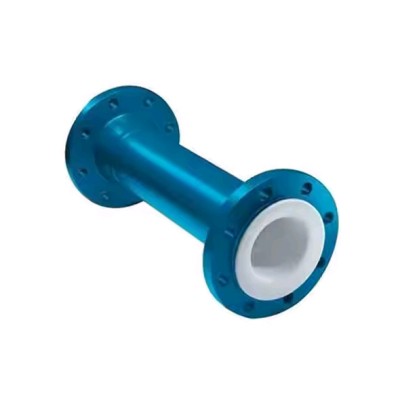
In addition to standard DN 800 tees, we also provide specialized products such as PTFE Lined Instrument Tee. These tees are lined with PTFE, which provides excellent corrosion resistance. The lining process is carefully controlled to ensure that the internal dimensions of the tee remain consistent, which is crucial for proper alignment and fluid flow.
We also offer Lined Pipe Fittings, including DN 800 tees, which are suitable for applications where corrosion is a concern. The lining not only protects the tee from corrosion but also helps to maintain the smoothness of the inner surface, reducing turbulence and improving flow efficiency.
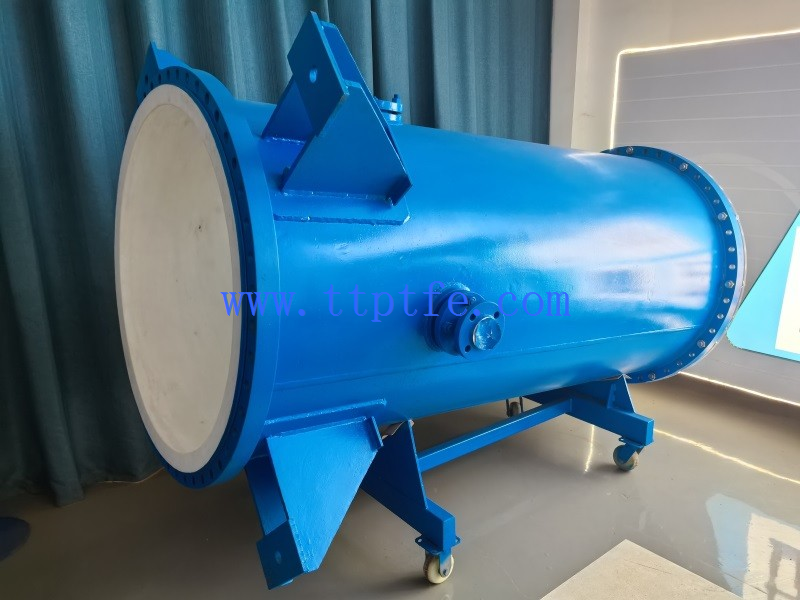
Another product in our portfolio is the PTFE Tower Section. These sections can be used in conjunction with DN 800 tees in large - scale industrial towers. The precise manufacturing of these tower sections ensures compatibility and proper alignment with the tees, contributing to the overall integrity of the piping system.
7. Conclusion and Call to Action
Proper installation alignment of a DN 800 tee is essential for the reliable and efficient operation of industrial piping systems. By adhering to the axial, radial, and angular alignment requirements, considering different connection methods and environmental factors, and using high - quality products, installers can ensure a successful installation.
If you are in need of DN 800 tees or any of our other related products, we invite you to contact us for procurement and further discussion. Our team of experts is ready to assist you with product selection, installation advice, and any technical questions you may have. We are committed to providing you with the best solutions for your piping system needs.

References
- ASME B31.3 Process Piping Code
- API 650 Welded Steel Tanks for Oil Storage
- Manufacturer's installation manuals for DN 800 tees