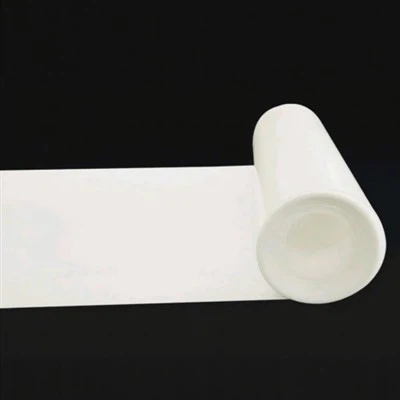
Alright, folks! As a supplier of filled PTFE sheets, I've seen firsthand the importance of thermal stability in various applications. Whether it's for industrial machinery, electrical components, or even aerospace parts, having a filled PTFE sheet that can withstand high temperatures is crucial. So, in this blog post, I'm gonna share some tips on how to improve the thermal stability of filled PTFE sheets.
Understanding Filled PTFE Sheets
First off, let's quickly go over what filled PTFE sheets are. PTFE, or polytetrafluoroethylene, is a synthetic fluoropolymer known for its excellent chemical resistance, low friction coefficient, and high electrical insulation properties. However, pure PTFE has some limitations, such as poor wear resistance and low thermal conductivity. That's where fillers come in.
Fillers are added to PTFE to enhance its properties. Common fillers include glass fiber, carbon fiber, bronze, and graphite. Each filler has its own unique characteristics, and the choice of filler depends on the specific application requirements. For example, glass fiber is often used to improve mechanical strength, while carbon fiber can enhance thermal conductivity.
Factors Affecting Thermal Stability
Before we dive into the ways to improve thermal stability, it's important to understand the factors that affect it. Here are some key factors:
1. Type of Filler
As mentioned earlier, different fillers have different thermal properties. Some fillers, like graphite and carbon fiber, have high thermal conductivity, which means they can transfer heat more efficiently. On the other hand, fillers like glass fiber have relatively low thermal conductivity. So, choosing the right filler is crucial for improving thermal stability.
2. Filler Content
The amount of filler in the PTFE matrix also affects thermal stability. Generally, increasing the filler content can improve thermal conductivity and mechanical strength. However, too much filler can lead to poor dispersion and increased brittleness, which can actually reduce thermal stability. So, it's important to find the right balance.
3. Processing Conditions
The processing conditions, such as temperature and pressure, can have a significant impact on the thermal stability of filled PTFE sheets. Improper processing can cause the filler to agglomerate or the PTFE matrix to degrade, resulting in poor thermal properties. Therefore, it's essential to optimize the processing parameters to ensure uniform dispersion of the filler and proper bonding between the filler and the PTFE matrix.
4. Environmental Factors
The operating environment can also affect the thermal stability of filled PTFE sheets. Factors such as temperature, humidity, and chemical exposure can cause the material to degrade over time. For example, high temperatures can cause the PTFE matrix to melt or the filler to react with the surrounding environment. Therefore, it's important to consider the environmental conditions when selecting a filled PTFE sheet.
Ways to Improve Thermal Stability
Now that we understand the factors affecting thermal stability, let's look at some ways to improve it.
1. Choose the Right Filler
As mentioned earlier, choosing the right filler is crucial for improving thermal stability. If high thermal conductivity is required, fillers like graphite and carbon fiber are good choices. These fillers have high thermal conductivity and can effectively transfer heat away from the material. On the other hand, if mechanical strength is the main concern, fillers like glass fiber and bronze can be used.
For example, if you're using filled PTFE sheets in a high-temperature electrical application, you might want to consider using graphite-filled PTFE sheets. Graphite has excellent electrical conductivity and thermal conductivity, which can help dissipate heat and prevent electrical breakdown.
2. Optimize Filler Content
Finding the right balance of filler content is also important. As a general rule, increasing the filler content can improve thermal conductivity and mechanical strength, but too much filler can lead to poor dispersion and increased brittleness. Therefore, it's important to conduct experiments to determine the optimal filler content for your specific application.
For example, if you're using glass fiber-filled PTFE sheets, you might start with a filler content of around 20 to 30%. Then, you can gradually increase the filler content and test the thermal and mechanical properties of the sheets to find the optimal composition.
3. Improve Processing Conditions
Optimizing the processing conditions is essential for ensuring uniform dispersion of the filler and proper bonding between the filler and the PTFE matrix. Here are some tips for improving processing conditions:
- Use a high-quality mixing equipment to ensure uniform dispersion of the filler.
- Control the temperature and pressure during the processing to prevent degradation of the PTFE matrix and the filler.
- Use a proper sintering process to ensure complete melting and bonding of the PTFE matrix.
For example, you might use a twin-screw extruder to mix the filler and the PTFE resin. The twin-screw extruder can provide high shear forces, which can help disperse the filler more evenly. Then, you can use a compression molding process to form the filled PTFE sheets. During the compression molding process, you can control the temperature and pressure to ensure proper bonding between the filler and the PTFE matrix.
4. Add Thermal Stabilizers
Thermal stabilizers are additives that can help prevent the degradation of the PTFE matrix and the filler at high temperatures. Common thermal stabilizers include antioxidants, heat stabilizers, and flame retardants. These additives can help improve the thermal stability of filled PTFE sheets by reducing oxidation, preventing thermal decomposition, and inhibiting the spread of fire.
For example, you might add an antioxidant to the filled PTFE sheet to prevent oxidation of the filler and the PTFE matrix at high temperatures. Antioxidants can react with free radicals, which are generated during the oxidation process, and prevent them from causing further damage to the material.
5. Consider Surface Treatments
Surface treatments can also improve the thermal stability of filled PTFE sheets. For example, you can apply a heat-resistant coating to the surface of the sheet to provide an additional layer of protection against high temperatures. The coating can also improve the surface properties of the sheet, such as wear resistance and chemical resistance.


Another surface treatment option is to use plasma treatment. Plasma treatment can modify the surface chemistry of the filled PTFE sheet, which can improve the adhesion between the sheet and other materials. This can be particularly useful in applications where the filled PTFE sheet needs to be bonded to other components.
Conclusion
Improving the thermal stability of filled PTFE sheets is essential for many applications. By choosing the right filler, optimizing the filler content, improving the processing conditions, adding thermal stabilizers, and considering surface treatments, you can enhance the thermal properties of filled PTFE sheets and ensure their performance in high-temperature environments.
If you're in the market for high-quality filled PTFE sheets with excellent thermal stability, don't hesitate to reach out for a purchase discussion. We've got the know - how and products to meet your needs.
Related Products
- Check out our Thickness PTFE Plate Teflon Plate for various thickness options.
- Our Plastic PTFE Plate offers great versatility.
- And for top - notch performance, consider our Teflon PTFE Plate.
References
- "Handbook of Fluoropolymer Science and Technology" by Harry L. Resnick
- "PTFE and Other Fluoroplastics" by Brian Walker